
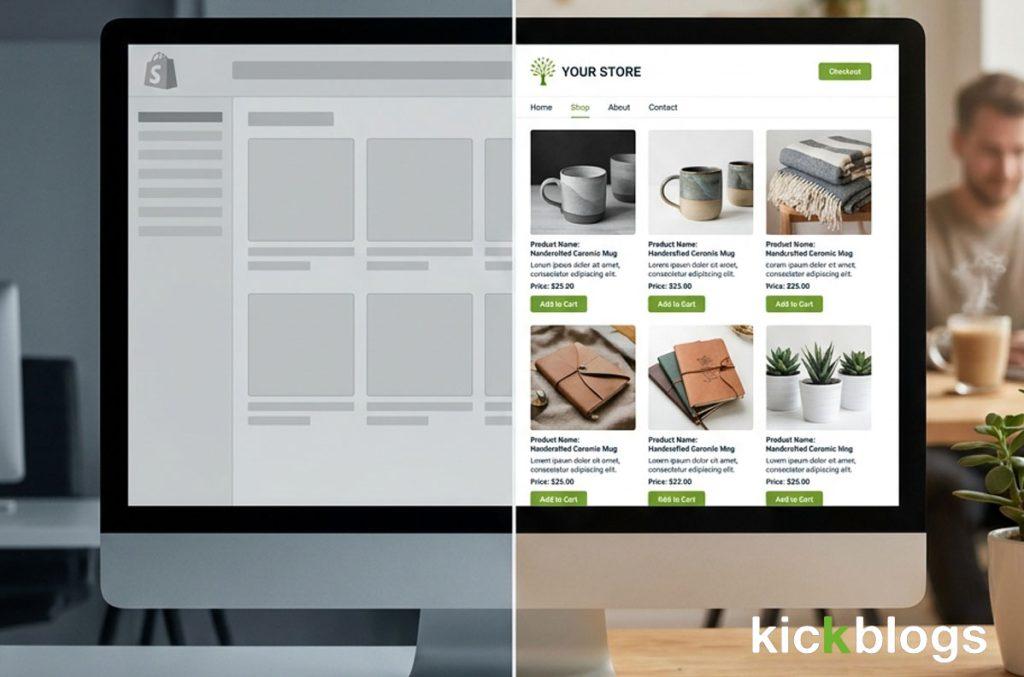
A Shopify subscription costs about forty dollars a month. An established online business costs somewhere between five and six figures. Almost everybody treats those two numbers as answers to the same question, and picks the smaller one.
They are not answers to the same question. One sells you a platform. The other sells you a trading record. The gap between them shows up in a single figure from Ahrefs: of all the pages published to the web, only 1.74% reach Google’s top ten within a year of going live.
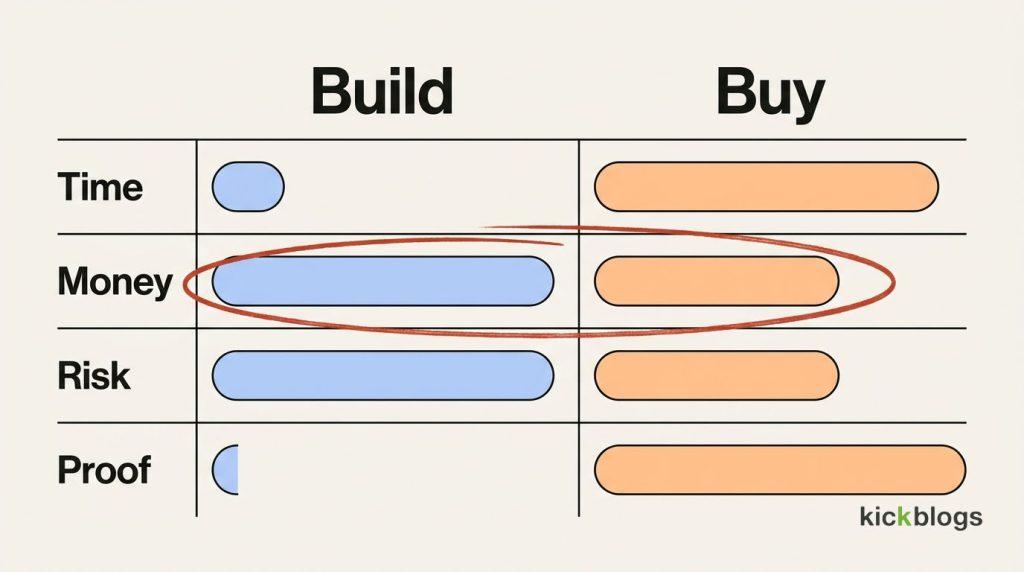
Scorecard comparing building and buying a website across time, money, risk and proof.
So the choice between buying an established website vs building from scratch comes down to four things. How long each takes before anybody finds you, what each costs in Australian dollars, how each one fails, and how much you can verify before you commit.
One disclosure first. We sell both of these two options and have an obvious incentive to argue for selling, as you can always build it yourself. So the build case below is made at its strongest rather than its weakest, and where the evidence cuts against us it gets quoted anyway. A comparison only one side can win is not a comparison. It is an ad with a table in it.
What You Are Actually Choosing Between
Nobody is confused about the difference between leasing an empty shopfront and buying a cafe that already trades. One has a lease and a floor. The other has a supplier who answers the phone and forty people who walk in every morning because they always have.
The fit-out is the fun part. The trading history is the valuable part, and you cannot build it in a fortnight.
Online, those same two things get quoted side by side as if they were competing prices for one item.
Building gives you a domain nobody has visited, a theme, and an empty content directory. That is worth something. You own every decision; you can change direction on a Tuesday afternoon without asking anybody, and the running cost is real but small: twenty to a hundred and fifty dollars a month for platform and hosting, no technical skill required.
If the business you want is your own expertise or your name, then building is the only option that exists.
Buying gives you four things a new site cannot manufacture:
- A domain with crawl history and backlinks pointing at it
- Content already indexed and already answering queries
- Rankings that already exist, for keywords you can look up before you pay
- In an established business, customers and revenue you can inspect
None of those four is guaranteed to keep working, and all of them can arrive in worse condition than advertised. Section three deals with that.
“Buying a website” also covers a range rather than a price point. At the entry end sits a built shell with an idea attached and no history behind it. Above that, domains with genuine age but thin content. At the top, businesses with years of trading, verifiable revenue and customers who reorder. Those are different products carrying different risks, and treating them as one category is how people end up disappointed.
Which of the two you should want depends on four things, and only one is money.
1. Time: How Long Before Anybody Finds You
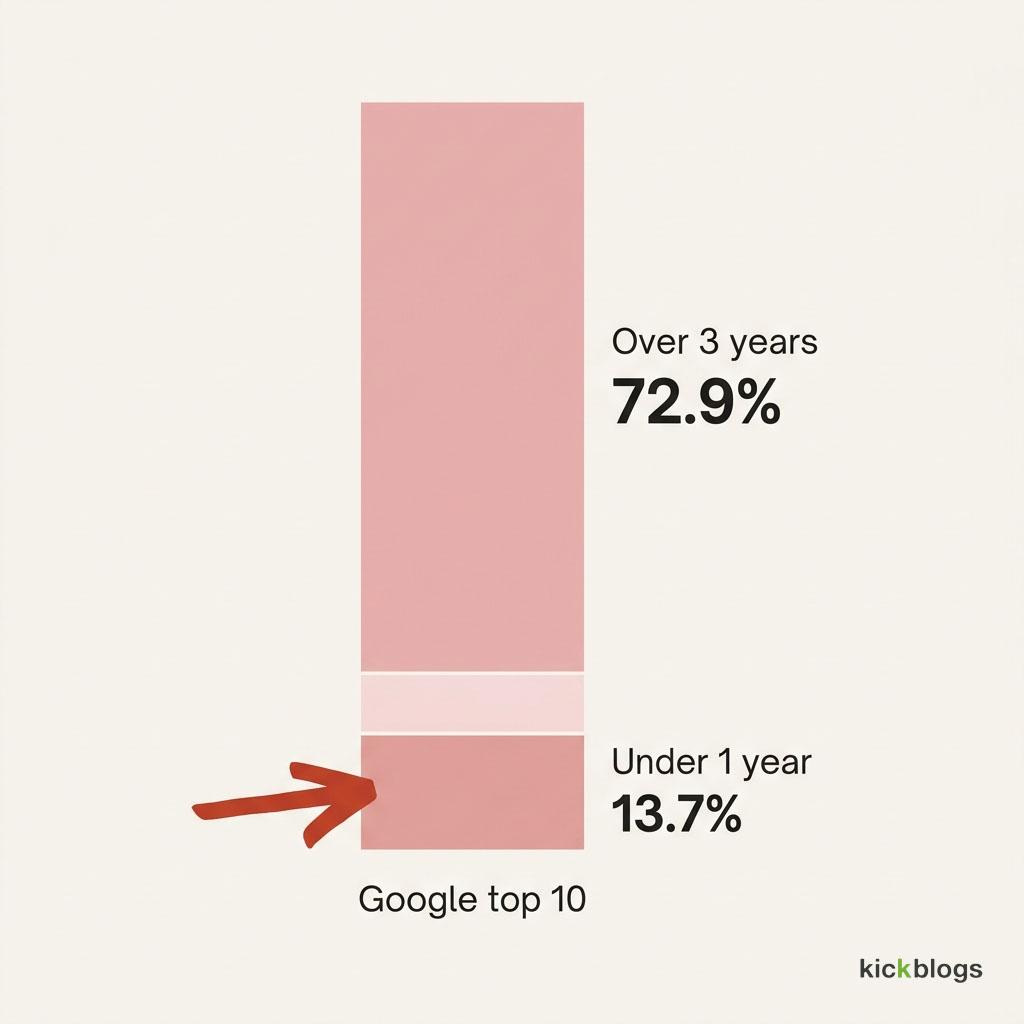
Most pages in Google’s top ten are over three years old, and only 13.7 per cent are under one.
Ahrefs studied newly published pages and found 1.74% of them rank in Google’s top ten within a year. When they ran the same study in 2017, the figure was 5.7%, and a parallel measurement a month later came out at 6.11%, so take the range rather than the scariest number in it. Either way, most new pages never see the first page in their first year.
The more useful finding sits underneath that one. Of the pages that do reach the top ten, 40.82% get there within the first month.
Ranking is front-loaded, not gradual. The common belief is that you grind away for a year and it slowly comes good. The data says the opposite. Pages that are going to work tend to announce themselves early, and pages still invisible at six months usually stay invisible. Ahrefs’ own recommendation is to rethink the strategy at that point rather than keep publishing and hope.
A page still invisible at six months has usually told you something. It has not asked you for more patience.
Then there is the competition. 72.9% of pages in Google’s top ten are more than three years old, up from 59% in 2017, and the average page at number one is five years old. Only 13.7% of top ten results are under a year old. A new page walks into that room.
Now the part that cuts against our own interest. Aged domains do not rank better because they are old. Google’s John Mueller has put it as plainly as it can be put: “No, domain age helps nothing.” Domain age is not among Google’s documented ranking factors and never has been.
What accrues with age is not a bonus. It is inventory. Backlinks somebody built, crawl history telling Google the site is worth checking, content already answering questions people are already asking. Those help. They correlate with age only because they take time to accumulate.
That distinction tells you what to check. An aged domain with no backlinks, no indexed content and no ranking history is not a head start. It is an old domain, and anyone selling one has every reason to hope you miss the difference.
On the so-called sandbox, Google has never confirmed one exists. What people observe is that new domains struggle on competitive terms for six to twelve months regardless of content quality. Treat that as a pattern, not a mechanism.
Best for: buying takes this axis outright. No version of building competes on time.
Skip if: the months are not really a cost to you. Somebody who wants to understand how search and content work is buying an education with that year, and an education is a real purchase rather than a consolation prize. The same trade-off runs through how to make a brand: the branding takes six weeks, the visibility takes a year.
2. Money: What Each Path Actually Costs in Australia
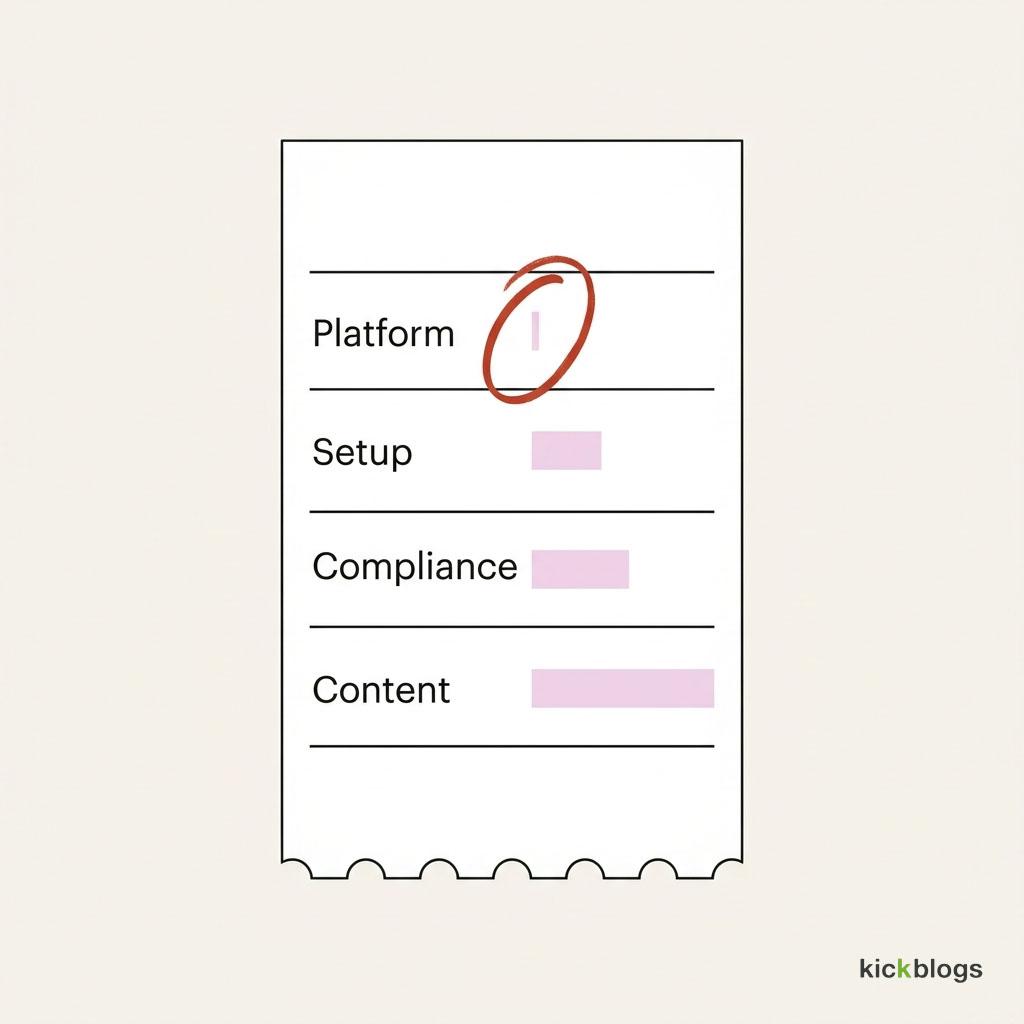
The platform subscription is a thin sliver at the base of a much taller stack of real costs.
“I could just build this myself on Shopify for thirty-five bucks a month and save the money.”
You could. The money is real, and the platform is genuinely good, and anybody telling you otherwise is selling something. But the thirty-five dollars a month buys the platform, and the platform is the cheapest component of a business that does not exist yet.
| Cost | |
|---|---|
| Platform and hosting | AU$20 to AU$150 per month |
| Store setup | AU$1,200 to AU$3,000 if you do not build it yourself |
| Payment processing | 1.75% to 2.9% per transaction |
| SSL and PCI compliance | AU$100 to AU$300 per year |
| Realistic first year, all in | AU$2,500 to AU$6,000+, before content |
Content is the line that changes the argument. Australian writers charge AU$150 to AU$600 an article, and a new site needs roughly thirty to fifty solid posts before organic traffic turns steady. Another AU$4,500 to AU$30,000, then, on top of the build.
The obvious objection is that you will write them yourself and pay nothing. True, and the correct move if your hours are genuinely spare. It also means the cost has not disappeared. It has changed currency.
Fifty articles written properly is several hundred hours, and at three a month, realistic for somebody with a job, the content alone takes more than a year of weekends. Chris Guthrie, who spent a published debate arguing in favour of buying, named the trap: “The biggest problem I see a lot of people making when they start out is by valuing their time at basically nothing.”
The other column, costed with the same rigour. Established content sites sell for thirty to fifty times monthly net profit, most transacting at thirty-five to forty-five, reaching fifty-five where traffic is spread across search, social and email.
You will find sources quoting twelve times and others quoting forty as though they disagree. They do not. Twelve to fifty is the range, and what moves a site up is diversification: traffic that does not depend on one query, revenue that does not depend on one contract.
Ecommerce is priced differently, at roughly half to one and a half times trailing twelve-month revenue for stores under a million, with inventory added at cost.
And buying does not stop the spending. One widely cited breakdown puts the first year of running an acquired site at around US$12,820 for content and link building alone.
One Australian line no overseas guide will give you. If a sale qualifies as a going concern, it is GST-free, worth ten per cent of the purchase price. The conditions are specific: both parties registered for GST, the seller supplying everything necessary for the business to keep operating, the seller still trading on the day of transfer, and a written agreement saying so.
The ATO can still reject it afterwards, and then the vendor wears the GST. So it belongs in the contract rather than in a spreadsheet.
The verdict on money: the two paths cost roughly the same. One bills you in dollars and the other in hours, and the only real question is your personal exchange rate between them.
3. Risk: The Two Different Ways This Goes Wrong
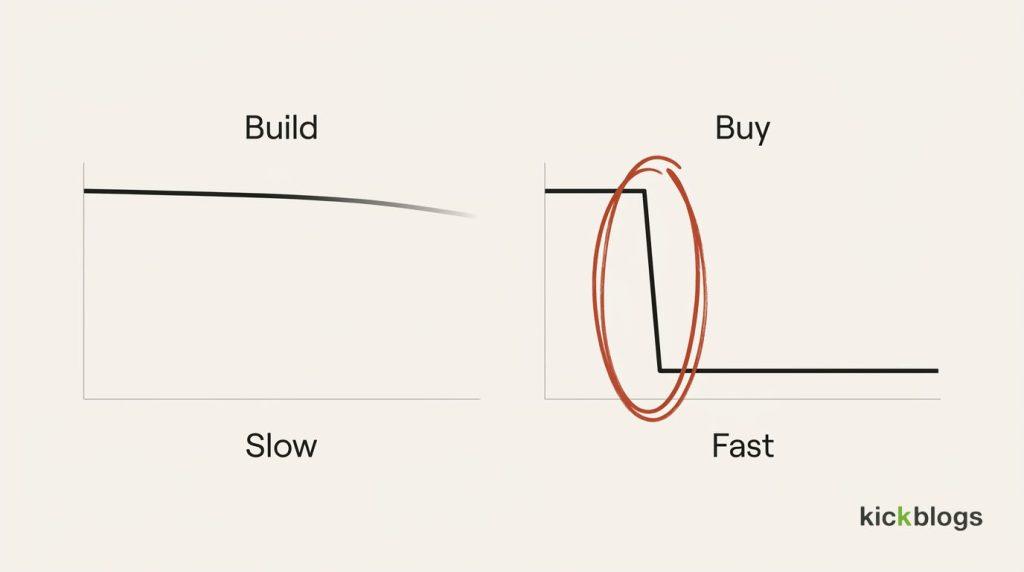
Building fails as a slow, gradual fade while buying fails as a sharp early cliff.
The category consensus is that building risks your time and buying risks your money. That sounds even-handed and is not, because it frames one risk as survivable and the other as a decision you might regret. Both are total in their own currency.
How building fails
It fails one way. Not the site failing. The owner stopping.
The Australian Bureau of Statistics has the relevant figure, and it is not the startup statistic everybody quotes. Somebody starting a side business alone is a non-employing business, and 74% of those are still operating after one year. After four years, 47% are. Two guests on a well-known side hustle podcast, arguing opposite sides of this exact question, agreed on the reason: “Your biggest risk is your own motivation.”
One widely circulated case study makes it concrete. A site started in 2015 on enthusiasm, ten articles published, first affiliate sale of seven dollars at month ten, no advertising revenue until year two. Three years of ownership produced US$726.16. People cite it to argue that building does not work. It shows something narrower: a site nobody works on does not work.
The fair version of the build case is stronger than anything in the buying column. Spencer Haws built a site for roughly US$200 that eventually earned US$3,000 a month. Buying one earning that much would have cost more than US$60,000. Building has an upside ceiling that purchasing structurally cannot reach, because the point of a purchase price is that somebody already captured the gain. The rebuttal is fair too: that is an abnormally high return, and most builders will not get it.
One thing worth saying plainly, because nobody in this category says it. An abandoned build is the ordinary outcome, not a personal failure. The real question is whether you are the kind of person who keeps working on something for eight months while nobody notices. Most people are not, including most of the people who succeed at this on their second attempt.
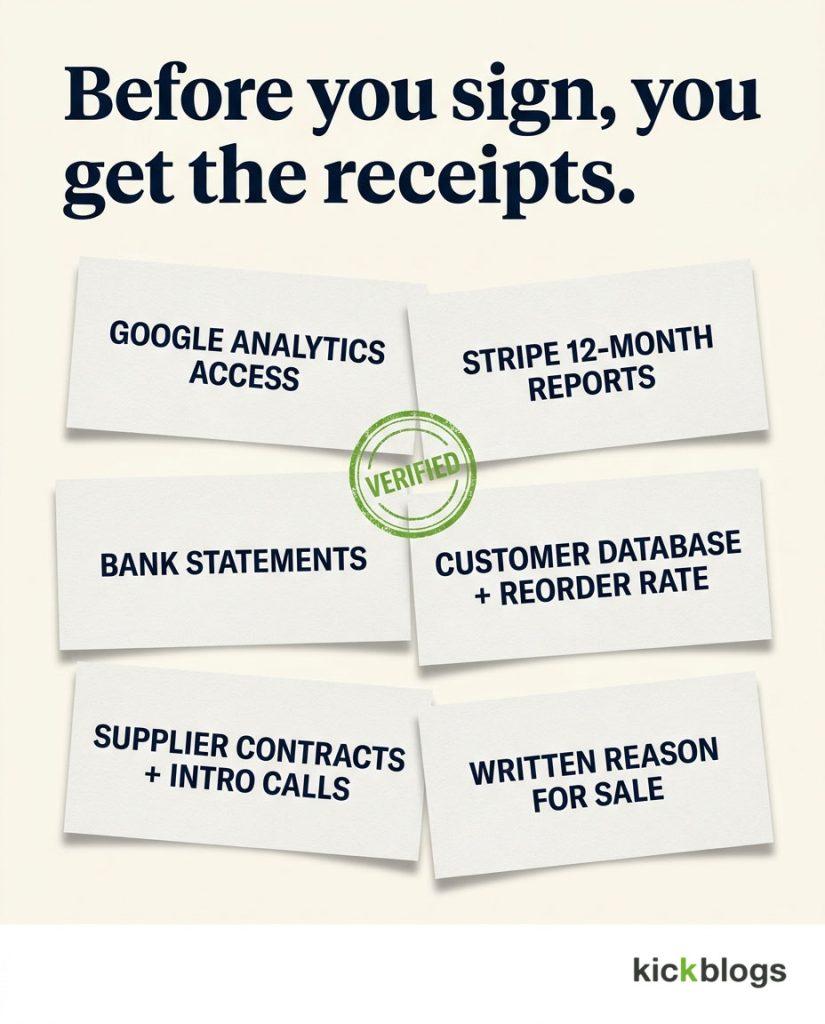
How buying fails
Four ways, and they are more specific than the one above.
You overpay for concentration. A site whose traffic comes overwhelmingly from one or two queries is not strong; it is fragile wearing good numbers. Same for revenue resting on a single affiliate contract that renews, or does not.
A channel gets taken away. One documented six-figure acquisition lost its traffic when Pinterest banned the site shortly after the sale. The ban was eventually reversed, but the buyer had no way of seeing it coming and no way of knowing it would end.
You break it yourself. The least discussed and the most common. Traffic drops after acquisition because of 302 redirects used where 301s were needed, redirects skipped for thousands of URLs, accidental noindex tags, and content deleted during a tidy-up because nobody checked what was driving the business first. Most acquired sites hit at least two, usually because no audit was run before closing.
You inherit a decline the seller could already see. The subject of the next section.
Guthrie, who spent that debate arguing for buying, conceded he has had losers in his own buying strategy. Then he closed with this: “I strongly suggest if you’re just getting started without much cash, start with building websites.”
Quick comparison: building fails slowly and privately, while you tell yourself it is still early. Buying fails fast and expensively, in the first ninety days. The second is worse to live through and better to learn from, because you can see it happening in time to react.
4. Proof: What You Can Check Before You Commit
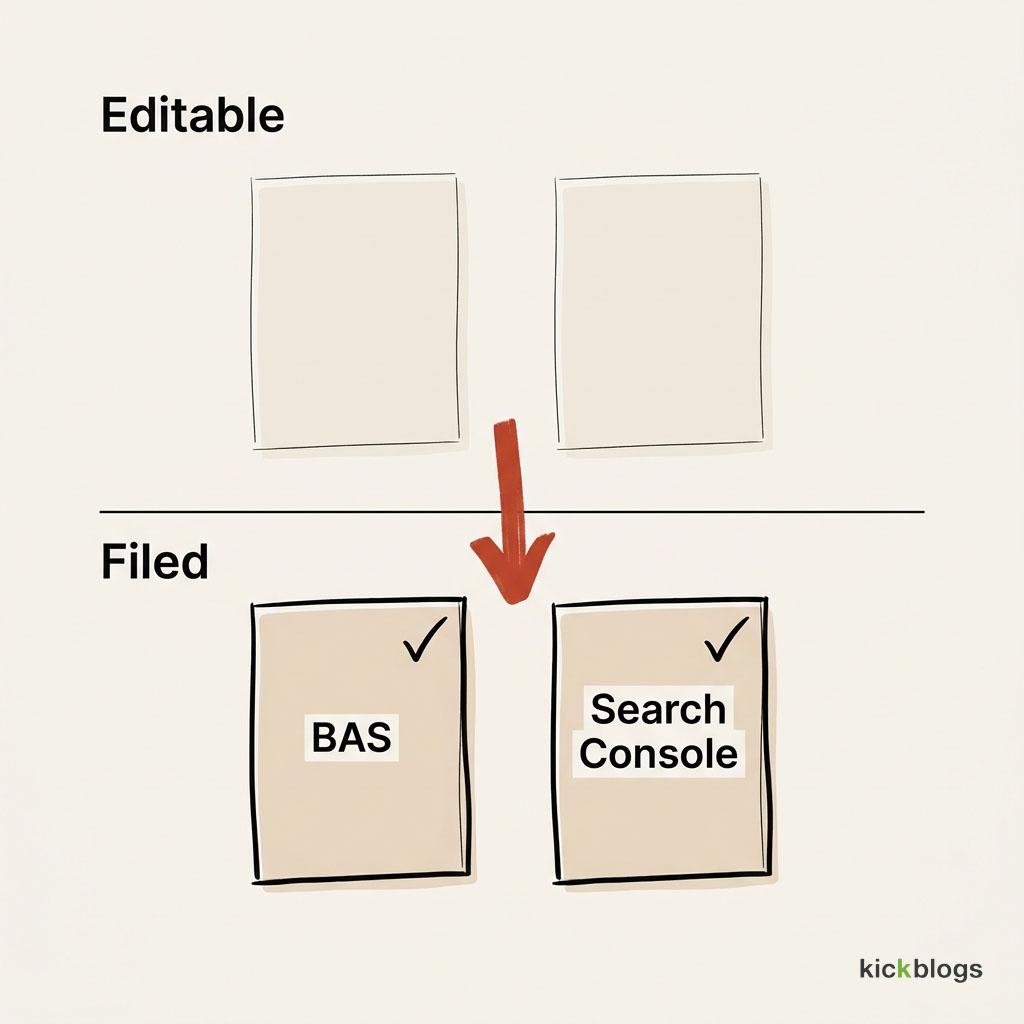
Screenshots can be edited by a seller. BAS lodgements and Search Console access cannot.
This is the axis where buying wins, and almost nobody talks about it, including most of the people selling it.
A build’s revenue is a projection right up until the day it is not. A purchase is the only version of this question where the evidence exists before the money moves. That advantage is worth nothing if you do not use it, and most first-time buyers do not.
Verifying the money, the Australian way
Every overseas guide stops at “ask for Google Analytics access instead of screenshots.” Fine as a floor. In Australia you have a better instrument.
Ask for three years of profit and loss statements, balance sheets, tax returns and business activity statements. Then cross-check the BAS lodgements against the revenue being claimed. This is the check that counts, because a BAS is lodged with the ATO. It is a third-party record, and the seller cannot go back and edit it. A revenue screenshot can be produced in an afternoon by anybody with a spreadsheet.
Reconcile those figures against bank statements, debtor collections and stock records. Where accounting income, GST reporting and cash movement disagree and nobody can explain why, treat it as a control problem rather than a clerical one. Then take the file to an Australian accountant who has done acquisitions.
Verifying the traffic
Ask for live Google Analytics and Search Console access as a user, rather than exports or a PDF.
Once inside, two things matter more than the headline number. Query concentration first: if most traffic arrives through one or two search terms, you are buying a position rather than a business, and positions move. Then whether the traffic is organic or paid, because paid traffic stops the day the seller stops paying and takes the revenue with it.
Why is the seller selling?
The first question in any acquisition, and not one competing article on this topic addresses it.
The legitimate answers are ordinary. A life change. Rebalancing a portfolio. An operator who enjoys building things and does not enjoy running them. A business built speculatively that needs a local operator to reach its market. The illegitimate answer is that they can see what is coming and you cannot.
The test is simple. The stated reason has to be consistent with the numbers. A seller citing a life change on a site whose traffic has been sliding for eight months has handed you two facts that do not fit together, and only one of them is a story.
The handover, where acquisitions actually fall apart
Thirty days of email support is the standard offer, and it is not enough. Negotiate a defined block of hours instead. A hundred and fifty across three months is a benchmark worth anchoring to.
List every asset explicitly in the purchase agreement. “The website and associated assets” is the phrase that produces disputes at closing. Every domain, every account handle, every platform login, supplier contacts, the customer database. And get the seller to introduce you to suppliers and key customers while they still hold goodwill there.
If you cannot get BAS lodgements, live Search Console access and a straight answer about why they are selling, you do not have a deal you can price. Walk away. There is always other inventory.
The Bottom Line: Which One Is You
| Build from scratch | Buy something established | |
|---|---|---|
| Time to traffic | 6 to 12 months minimum. 1.74% of new pages reach the top ten in year one | Immediate. It already arrives |
| Cost | AU$2,500 to AU$6,000 first year, plus AU$4,500 to AU$30,000 of content or several hundred hours | 30 to 50× monthly profit for content sites, plus first-year running costs |
| How it fails | Abandonment. 47% of non-employing Australian businesses survive four years | Overpaying, channel dependency, or damaging it yourself in the first 90 days |
| What you can verify first | Nothing. It is a projection until it is not | BAS lodgements, Search Console, three years of accounts |
| Upside ceiling | Very high. US$200 to US$3,000 a month is possible | Capped. You paid for the gain that already happened |
| What it rewards | Patience, and publishing into silence | Operating skill, and due diligence |
Build from scratch if the thing you want to build is your own expertise or reputation and could not be bought as a going concern. If you have income from somewhere else and can survive a year that pays nothing. If learning how search, content and traffic work is part of what you want rather than an obstacle in front of it. And if you have the temperament to publish into an empty room for eight months, a temperament rarer than anybody admits and not a character flaw to lack.
Buy something established if you need revenue inside twelve months, whether that is a redundancy package with a clock on it or a deadline you set yourself. If your actual skill is operating a business rather than waiting for one to grow, the skill twenty-five years in sales or marketing actually leaves you with. If you would rather spend money than years. Or if you have already tried building, stalled somewhere around month eight, and read the risk section above as a description rather than a warning.
There is a third answer between them, and no competing article mentions it because none of them sell it. Worth saying out loud rather than pretending we found it neutrally. A site built for you on a domain that already has history gives you the backlinks, the crawl record and a body of content, without inheriting somebody else’s decisions and without the verification problem, because there is no trading record to fake.
Neither of the two main options is smarter in the abstract. They answer different questions. The common mistake is not choosing wrong. It is never knowing there was a choice, and defaulting to building because every guide you read assumed you would.
If you want to see what the second path costs in practice, the KickBlogs marketplace lists what is currently available across the range. If the third path fits better, that is what our done-for-you services cover.
Frequently Asked Questions
Is it better to buy an existing website or start from scratch?
It depends on which resource is scarce for you. If time is short and capital is not, buying removes the wait for traffic and lets you verify real numbers before paying. If capital is short and you can be patient, building costs very little in cash and has a far higher upside ceiling. Neither is safer. They fail differently.
How long does a new website take to get traffic?
Ahrefs found only 1.74% of newly published pages reach Google’s top ten within a year. Of the pages that do get there, 40.82% arrive within the first month, so ranking is front-loaded rather than gradual. New domains typically struggle on competitive terms for six to twelve months. Six months of nothing is information, not a reason for more patience.
Do aged domains really rank better?
Not because they are old. Google’s John Mueller has said “no, domain age helps nothing,” and domain age is not among Google’s documented ranking factors. What helps is the backlinks, crawl history and indexed content that accumulate over time. So check what a domain has collected, not its registration date.
How much does it cost to buy a website in Australia?
Content sites generally sell for thirty to fifty times monthly net profit, most commonly thirty-five to forty-five times. Ecommerce is valued differently, at roughly half to one and a half times trailing twelve-month revenue for stores under a million, with inventory added at cost. Budget for the first year of running costs on top. Most first-time buyers forget to.
How do I verify a website’s revenue is real?
Ask for BAS lodgements and cross-check them against the claimed revenue, then reconcile against bank statements and three years of accounts. Because a BAS is lodged with the ATO, the seller cannot edit it after the fact, which a screenshot allows. Add live Search Console and Analytics access as a user, then have an Australian accountant review the file.
Do I pay GST when I buy an online business in Australia?
Not if the sale qualifies as a going concern. Both parties must be registered for GST, the seller must supply everything necessary for the business to keep operating and must trade until the day of transfer, and there must be a written agreement stating the sale is a going concern. That is ten per cent of the price, so confirm the treatment with your accountant before signing.
Can I just build the same thing on Shopify for $20 a month?
The platform genuinely costs that. What it does not include is the niche decision, the content, or a single visitor. A small Australian store runs AU$2,500 to AU$6,000 in its first year before content, and content costs AU$150 to AU$600 an article across the thirty to fifty posts a site needs. Write it yourself and the price is hours instead. That is the actual trade, and which side of it is cheaper depends on what stage you are at.
Get High-Level Support

How To Use Instagram For Business Without Chasing Followers
Nearly every guide about using Instagram for business opens with the same instruction. Build a…
Buying a Local Business: What Turnkey Really Means
“Turnkey” is the word a seller reaches for when they’d rather you stopped asking questions….

Get More Clicks on Your Google Ads Without Paying More
Most articles on this topic list five or six ways to get more clicks. The…
Starting a Business After The Kids Leave Home
The Victorian Government’s Better Health Channel describes it in language most people would not dare…

You Need To Know This – Before Starting An Online Business
Almost every guide to starting an online business opens the same way. Here are the…
How To Successfully Run A Facebook Page
You should have a Facebook Page. That part of the standard advice is correct, and…
How to Create Search-Relevant Content in 2026
Search-relevant content answers the exact question someone typed, in the shape they expected the answer…
How To Choose The Best Social Media Platforms For Your Website?
Most advice on this hands you a list of things to consider. Your audience. Your…