

“Turnkey” is the word a seller reaches for when they’d rather you stopped asking questions. Turn the key, walk in, start earning. It sounds like all the risk has been handled for you.
Sometimes it has. A genuine turnkey business in regional Australia is a real thing worth paying for, and buying one beats building from zero for most people who want to own something that already works.
But the word itself proves nothing. It’s a claim, and the claim is only as good as what you can verify behind it.
That’s the whole job here: separating a business that actually runs from one that’s been dressed up to look like it does. This guide shows what turnkey should mean for a regional buyer, and how to prove the numbers before you pay a cent.
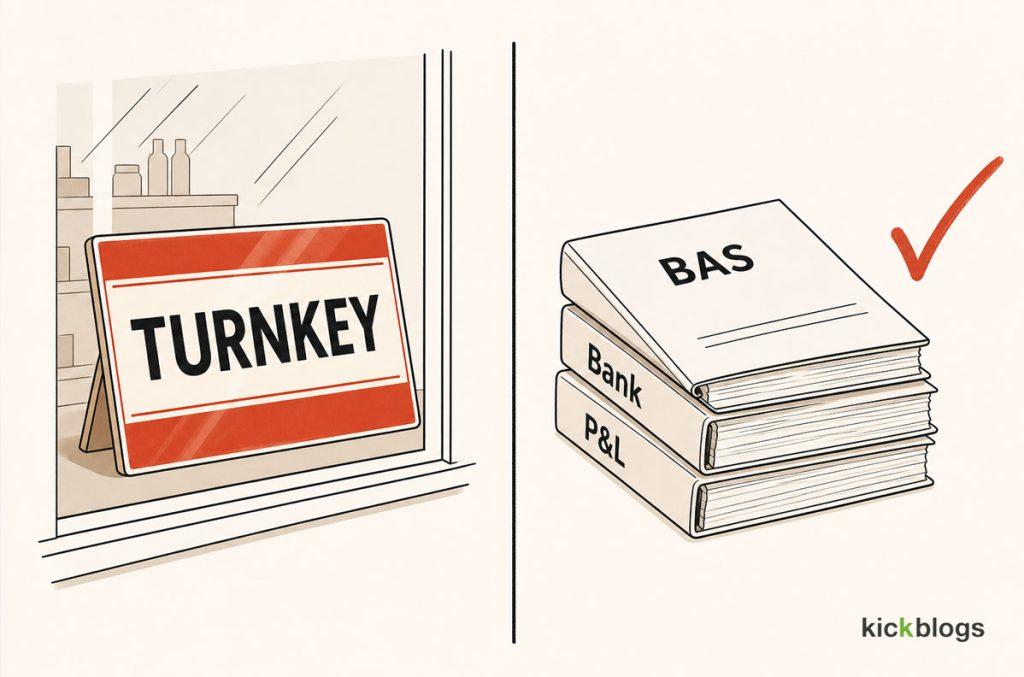
One thing up front. KickBlogs builds and sells local businesses, so we’ve an interest in you buying one. That’s exactly why everything below is a test you can prove yourself, with your own accountant, on the seller’s own documents.
What Turnkey Is Supposed to Mean, and How the Word Gets Abused
An honest turnkey business is one you can operate the day after settlement without rebuilding it first. That’s a short definition with a long checklist behind it.
It means active customers and current revenue, not a lapsed list. It means equipment that works and staff who are trained and staying on. It means the processes are written down, the supplier relationships continue, and the licences transfer. A business where all of that is true is genuinely ready to run.
The trouble is that “turnkey” is a marketing word, not a certified one. Nobody audits its use. So it can be stretchy.
It gets stuck on troubled businesses to make operational weakness sound like a feature. It gets used for franchise concepts that aren’t operating businesses at all.
Most often, it hides owner dependence: the business runs beautifully, but only because the current owner is the one running it. CT Acquisitions, which brokers these deals, lists all three as standard misuses of the label.
So treat the word the way their guide puts it.
Turnkey is a claim to verify, not a fact to accept.
The rest of this article is how you do the verifying.
The Only Question That Matters: Are the Numbers Real?
Everything a seller tells you about a business is a representation. Your job is to test it against evidence, because once you’ve bought it, the problems are yours, not theirs.
Greg’s question, the one every serious buyer asks, is the right one: is this real revenue or marketing fluff? A headline figure on a listing proves nothing. “Turning over $200,000 ea year” is a sentence, not a fact, until you can verify it somewhere the seller doesn’t control.
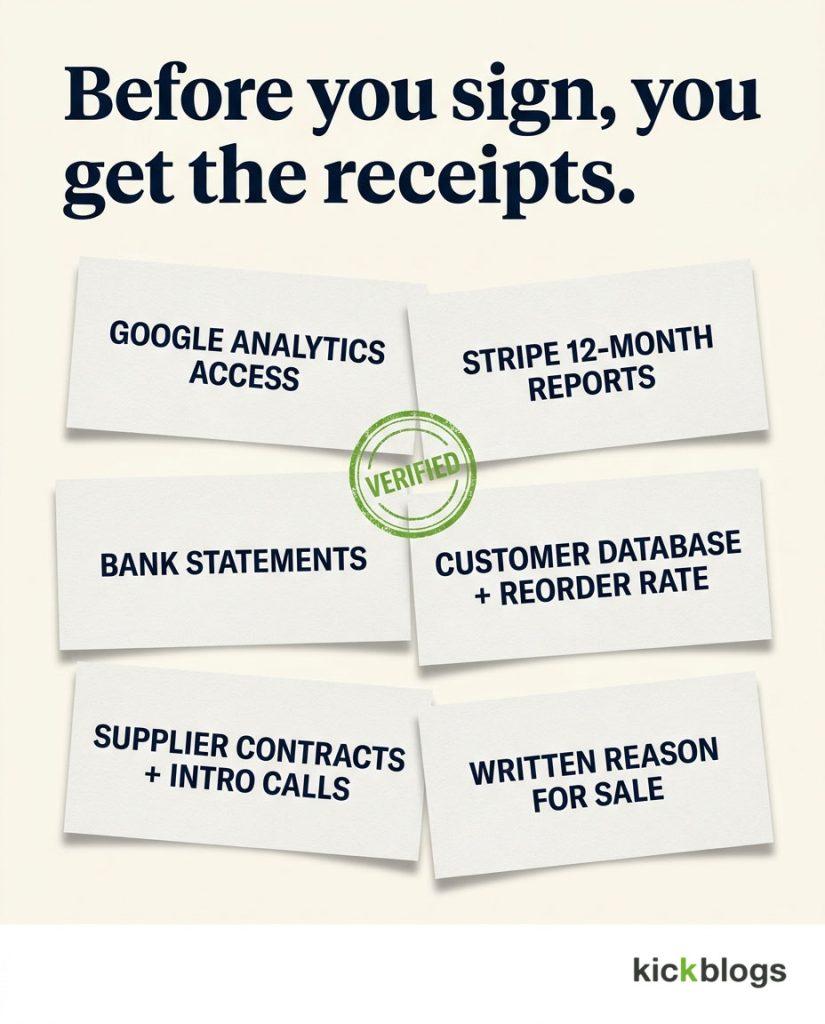
Real revenue leaves a trail in places outside the seller’s spreadsheet. It shows up as deposits in a bank account. It shows up in the BAS lodged with the ATO. It shows up in supplier invoices and merchant settlement reports. Marketing fluff shows up in exactly one place: the pitch.
That’s why the clearest warning sign, according to Xero’s due-diligence guide, is financials that don’t match tax returns or bank records. Right behind it: a seller who’s reluctant to hand over documents. If the numbers are real, proving it costs the seller nothing. Hesitation is information.
There’s a related trap worth naming. Sellers rarely lie outright. More often, the numbers are technically true but arranged to flatter. A “record year” that was one unusual contract. Revenue quoted gross, so the thin margin underneath stays hidden.
A customer count that includes everyone who ever bought once. None of that is fraud, and all of it falls apart the moment you trace the figures to source rather than reading them off the pitch.
How to Verify Revenue: BAS, Bank Statements, and the P&L
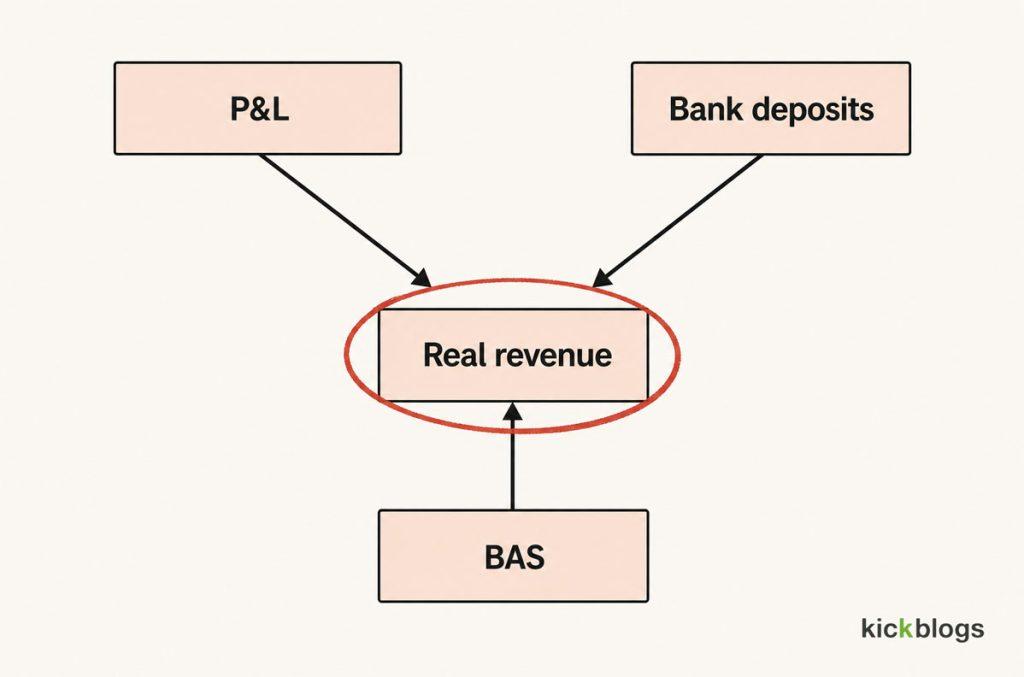
Here’s the part no overseas turnkey guide covers, because it’s specifically Australian. You’ve got three independent records of the same revenue, and real revenue makes all three agree.
Work them in order.
First, get three to five years of tax returns, profit and loss statements, and financials. Xero treats this as the baseline, and anything less than a few years of history makes trends impossible to read.
Second, reconcile the P&L revenue against the actual bank deposits. You’re checking that the money the business says it earned actually landed in the account. Matching reported revenue to deposits is the standard way to expose a gap between what’s claimed and what’s real.
Third, cross-check both against the BAS. A business that under-reports to the ATO is committing an offence, so the BAS is the hardest of the three numbers to inflate. When the P&L, the bank statements and the BAS all tell the same story, the revenue is real. When they don’t, you’ve found either sloppy books or a lie, and both change the price.
Plan for four to 12 weeks, and do this part with your accountant beside you.
This is also what a proper handover should physically contain. Not a screenshot of a dashboard, but the reconciled statements, the BAS copies, the merchant reports, the supplier accounts. A seller who’s built a real business already has these. Ask to see them early, because how fast they arrive tells you most of what you need to know.
Reorder Data and Supplier Relationships: Proof the Revenue Repeats
Verified revenue still isn’t the finish line. A business can prove it earned $200,000 last year and still be a bad buy if that money was one-off and won’t come again.
So the next test is durability. Two businesses can reconcile to the same annual revenue while being worth completely different amounts of money. One had a handful of big jobs that happen to have closed. The other has a book of customers who reorder on a schedule. You want the second one, and reorder data is how you tell them apart.
Ask for the repeat-purchase history. How many customers bought more than once. How often they come back. What share of last year’s revenue came from customers who’d also bought the year before. A high reorder rate is the closest thing to proof that the revenue is a system, not a streak.
This matters most for the businesses that suit a local buyer. Take an established local promotional products business selling uniforms, branded merchandise and signage to schools, clubs and councils. Its value isn’t the stock in the cupboard. It’s the standing orders and the supplier terms, the fact that the local footy club reorders jerseys every season and the print supplier gives trade pricing. That’s the transferable business.
Which is why a supplier introduction is a real deliverable, not a courtesy. A warm handover means the seller walks you into those accounts, vouches for you, and transfers the terms. A cold contact list is a spreadsheet of phone numbers. Insist on the introduction.
Is It a Business or a Job? Testing for Owner Dependence
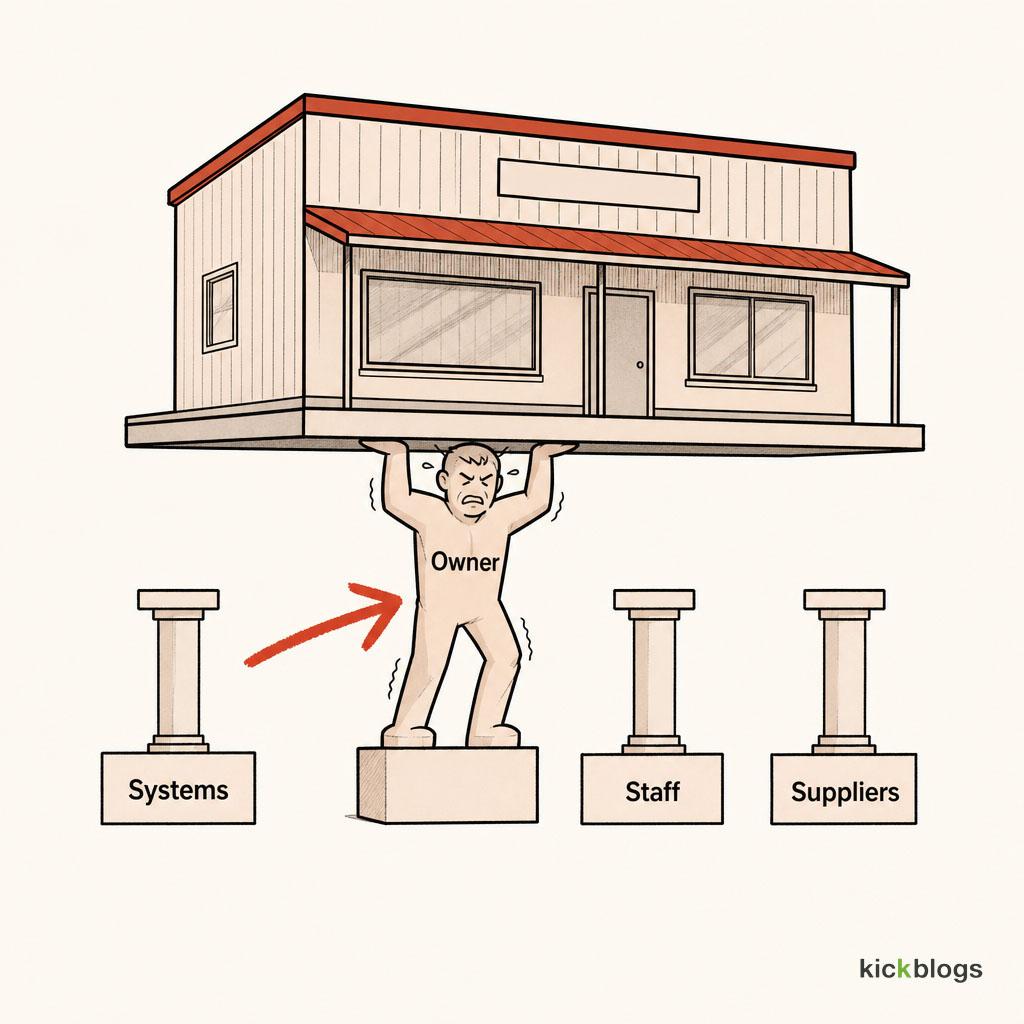
The worst turnkey purchase is one where the key that turns is the previous owner. It runs, it earns, it looks like a business. Then the owner leaves and it quietly falls over, because they were the thing holding it up.
That’s the fear worth taking seriously, and it’s why owner dependence hides behind the turnkey label so often. A business that only works because one person knows every customer, every price and every supplier isn’t an asset you’re buying. It’s a job you’re paying to inherit, and it’s a job that gets harder the moment the person who was good at it walks out the door.
You test for it with a few blunt questions. Are the processes written down, or are they in the owner’s head? Will the key staff stay, and is that in writing? Are the customer and supplier relationships held in a system, or in one person’s phone? Is there a transition period where the seller sticks around while you learn it?
A de-risked handover has answers to all four. Documented procedures, staff committed to staying, relationships introduced and transferred, and an agreed handover window. The presence of those things is what separates a business from a job.
It shows up in the price, too. Owner reliance is one of the main factors that pulls a business’s valuation multiple down, so a business you can actually step away from is worth more, not just safer.
The Regional Reality: Thinner Deal Flow, Different Risks
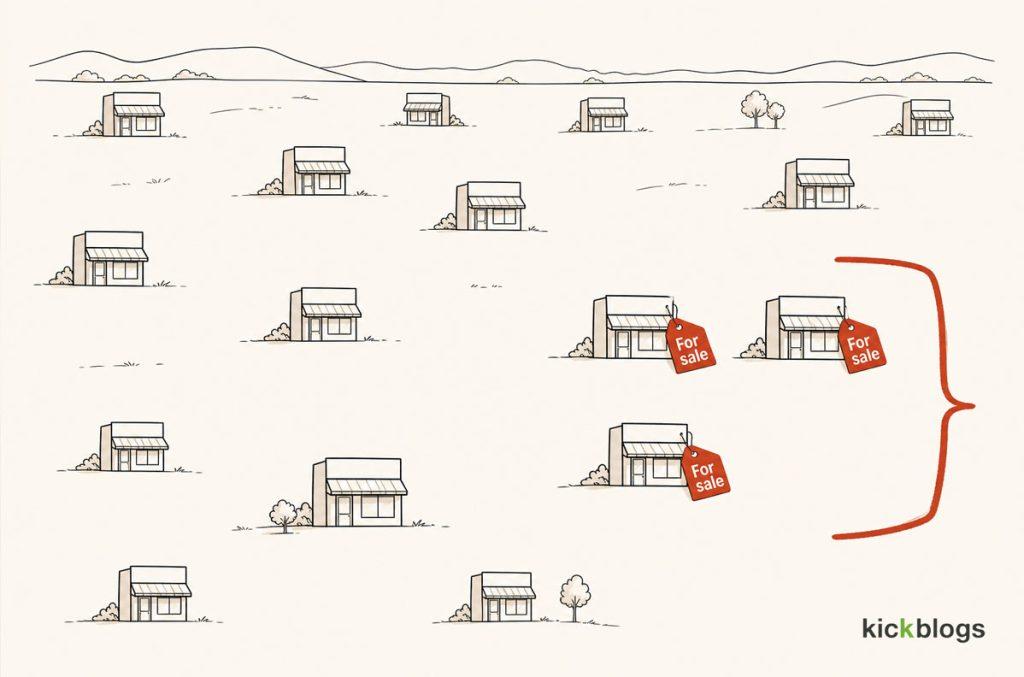
Buying in a regional town isn’t the same game as buying in a capital city, and the guides written for metro buyers skip the parts that matter to you.
Start with supply. Just over 30% of small businesses sit outside greater capital city areas, which means fewer businesses for sale near you and fewer comparable sales to benchmark a fair price against.
You’ll often be valuing a business with less to compare it to, which makes the verification work above more important, not less.
Now the part that surprises people. Regional doesn’t mean fragile. In the ABS business-survival data, some of the strongest survival rates in the country are regional: Outback South Australia leads at 83.4%, the WA Wheat Belt sits at 82.2%, while several Sydney regions sit at 71% to 74% (Brainiact’s survival report, built on ABS counts).
A well-run business in a regional town can be a safer bet than a metro one, not a riskier one.
What is different regionally is reputation. In a small town, the business’s name travels, and it transfers to you at settlement.
A good reputation is an asset you’re buying. A bad one is a liability you’re inheriting, and no amount of rebranding outruns it locally. Ask around before you buy, because your customers already have.
The staffing pool is thinner too. In a capital city, you can replace a departing manager from a deep local market.
In a regional town, the person who runs the business might be one of a handful who can, which raises the stakes on the owner-dependence tests above.
If the business leans on one or two key people, confirm they’re staying before you value it as though they will.
What It Should Cost, and What Protects the Price
A price should be tied to what the business earns, verified, not to a round number the seller likes.
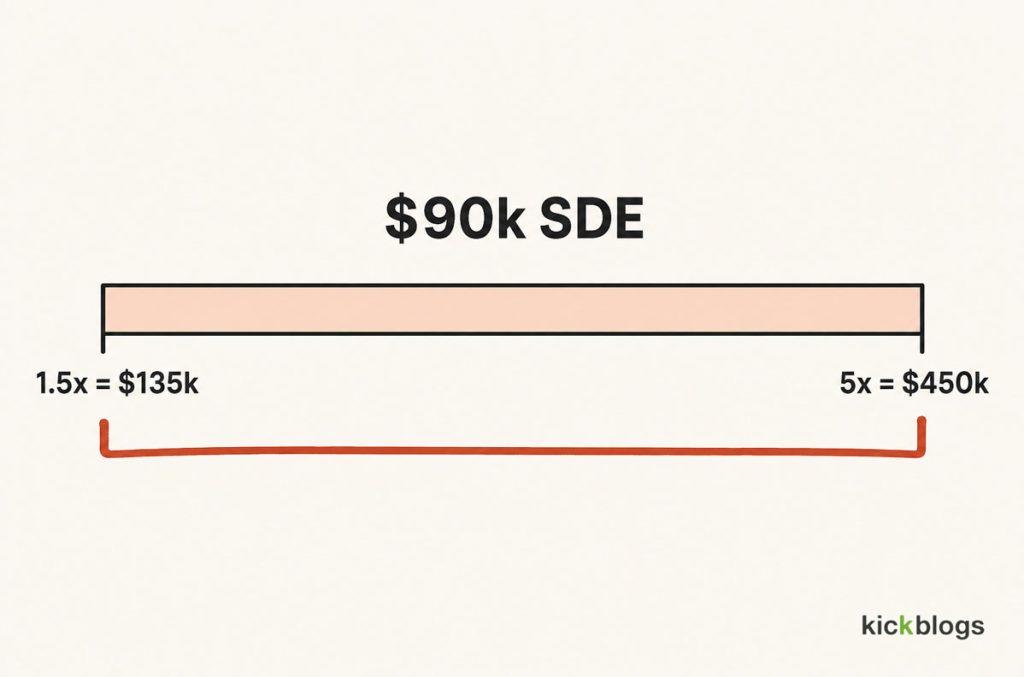
Australian small businesses typically sell at 1.5 to 5 times Seller’s Discretionary Earnings, which is the profit plus the owner’s own wage and perks added back.
Where a business lands in that range isn’t random. A standard retail shop or cafe sits at the bottom, around 1.5 to 2.5 times. An essential B2B service with recurring revenue and low owner dependence reaches the top, 3 to 5 times.
Everything you’ve verified above – the real revenue, the reorder rate, the staff staying- is what moves a business up that scale.
Put numbers on it. Say a local supply business shows verified discretionary earnings of $90,000 a year. At the bottom of the range, that’s a business worth around $135,000. At the top, it’s worth $450,000.
Same earnings, a $315,000 spread, and the only thing that decides where it sits is how much of the risk you managed to verify away. This is why the document-chasing isn’t busywork.
Every reorder record and staff commitment you can prove is money that moves from the seller’s side of the table to yours.
Two Australian mechanisms then protect what you pay.
The first is the GST going-concern exemption. If the sale is properly structured as a going concern, with both parties registered for GST, the business handed over as a working whole, and the agreement in writing, the sale is GST-free. Get it right and 10% doesn’t come off the top.
The second is a PPSR search. Before settlement, your lawyer checks the Personal Property Securities Register for finance owed on the equipment and vehicles, and gets it released. Skip it, and you can buy a van that the finance company still half-owns.
A business that arrives already built, verified, documented and cleanly transferable is what “turnkey” should have meant from the start.
That’s what the KickBlogs Local Business Package is built to be, and it’s the tier where the verification work is done before you ever see the listing.
If you’re weighing one up, tell us what you’re looking for, or see what’s listed now and put the tests above to it.

Frequently Asked Questions
What does turnkey actually mean when buying a business?
It means a business you can operate the day after settlement: active customers, current revenue, working equipment, trained staff staying on, documented processes, and supplier relationships that continue. Treat the word as a claim to verify against the seller’s documents, not a guarantee. If the seller can’t show those things, it isn’t really turnkey yet.
How do I verify a seller’s revenue is real?
Cross-check three independent records. Match the profit and loss revenue against actual bank deposits, then check both against the BAS lodged with the ATO. Real revenue makes all three agree. If the financials don’t match the tax records or bank statements, that’s the clearest red flag there is. Do it with an accountant.
Why would someone sell a profitable local business?
Usually for ordinary reasons: retirement, a tree-change, ill health, or an owner focusing on another venture. Those are fine. The red-flag version is an owner exiting just ahead of a lease ending, a major customer leaving, or a big competitor arriving. Ask directly why they’re selling, then check the answer against the numbers and the town.
How long does due diligence take?
Plan for four to 12 weeks, though a very small business can be quicker. The timeline depends on how clean the seller’s records are and how fast they hand them over. Don’t rush it, and don’t do the financial and legal parts alone. An accountant and a lawyer will catch what you can’t.
Is buying a local business cheaper than starting one from scratch?
No, and that’s the point. You pay more upfront because you’re buying proven revenue instead of a projection. Starting from scratch is cheaper and slower, and most of the risk is that it never earns at all. Buying shifts your money from “will it work” to “prove it already does”.
Get High-Level Support

Get More Clicks on Your Google Ads Without Paying More
Most articles on this topic list five or six ways to get more clicks. The…

Starting a Business After The Kids Leave Home
The Victorian Government’s Better Health Channel describes it in language most people would not dare…

You Need To Know This – Before Starting An Online Business
Almost every guide to starting an online business opens the same way. Here are the…

How To Successfully Run A Facebook Page
You should have a Facebook Page. That part of the standard advice is correct, and…
Buy an Established Website vs Build From Scratch: An Honest Comparison
A Shopify subscription costs about forty dollars a month. An established online business costs somewhere…
How to Create Search-Relevant Content in 2026
Search-relevant content answers the exact question someone typed, in the shape they expected the answer…

How To Choose The Best Social Media Platforms For Your Website?
Most advice on this hands you a list of things to consider. Your audience. Your…

Digital Marketing Tactics Ranked by What They Pay Back
Most lists of digital marketing tactics online share the same flaw. They hand you ten…