
You’ve decided to sell the site. Maybe it’s been on autopilot for months, maybe a new project needs the time and the capital, maybe it’s just run its course for you.
Whatever the reason, you now have to work out how to sell a website in Australia without giving away half the proceeds to fees you didn’t see coming or a tax bill you didn’t plan for.
Most advice on this is written for an American seller. It skips the two things that decide what an Australian actually walks away with: the GST clause in your contract, and how the ATO treats the gain.
It also tends to skip the honest part, which is that the listing price is not the price, and the whole thing takes months.
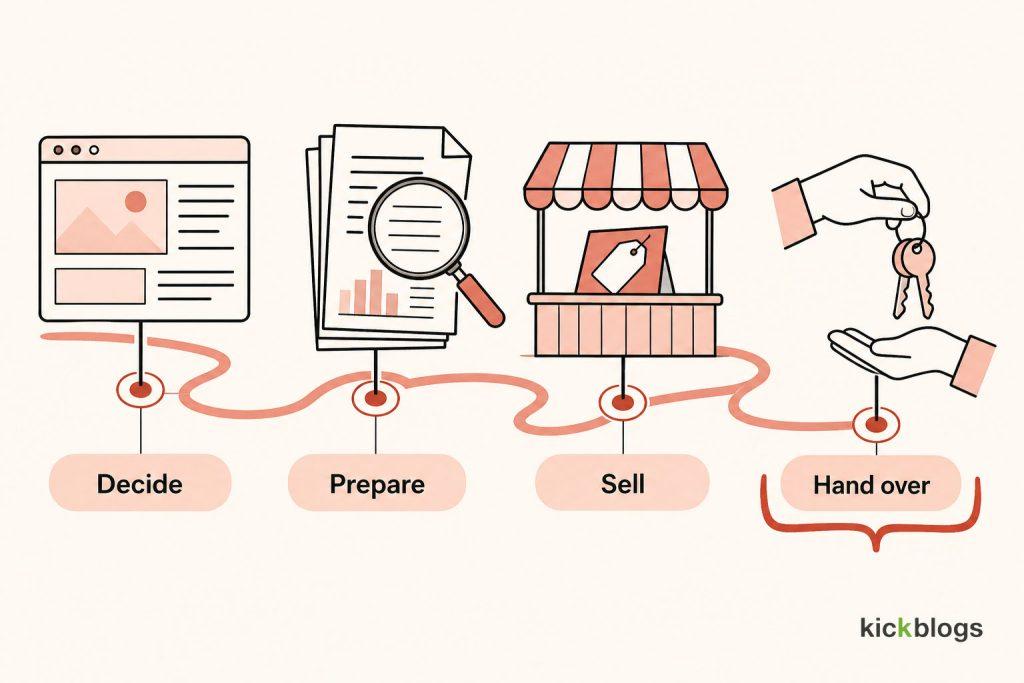
This is the process in the order you should actually do it. Valuation gets one step, because working out what your site is worth is a job on its own, and we’ve written that up separately.
It’s still got potential. Just not for you. That’s a perfectly good reason to sell, and it’s worth doing properly.
1. Work Out What It’s Worth, Then Move On
Every seller starts here, and most start wrong. They plug the site into a free calculator, get a number, and either fall in love with it or panic.
The method that matters is simple. A content or affiliate site sells for a multiple of its average monthly net profit.
A small ecommerce store sells for a multiple of annual earnings. Profit, not revenue, and not traffic.
That’s the one line you need before you list. The rest of it – the realistic 2026 multiples, what moves your number up or down, and the worked example of what you keep after tax, sits in our full guide to how much your website is worth.
Read that first, get a defensible range, then come back here for the selling itself.
One number to carry with you from that guide: a listing price is an ask, not a result.
Empire Flippers’ own scoreboard shows sales averaging 86% of the list price. Price to sell, not to impress.
2. Get Your Books and Proof in Order

A buyer isn’t buying your word. They’re buying what they can verify, and the gap between those two things is where deals fall over.
Before you talk to anyone, get twelve to twenty-four months of clean profit and loss into an accounting system, not a shoebox of screenshots.
Give yourself verified Google Analytics and Search Console access you can hand over. Have proof that you own the domain, the content, and the accounts.
If the site has ever taken a Google penalty or a manual action, know the date and the recovery, because an undisclosed one is a deal-killer when the buyer finds it, and they will.
This is what due diligence actually checks. Australian firm Sprintlaw splits it into three:
- the financials (are the earnings real and sustainable),
- the operations (does it run without heroics),
- and the legal (do you actually own what you’re selling).
Start months before you list, not the week a buyer appears.
The reward for this is not just a smoother sale. Clean, verifiable numbers are what let a buyer pay the top of your range instead of discounting for risk they can’t rule out.
3. Make the Site Less About You
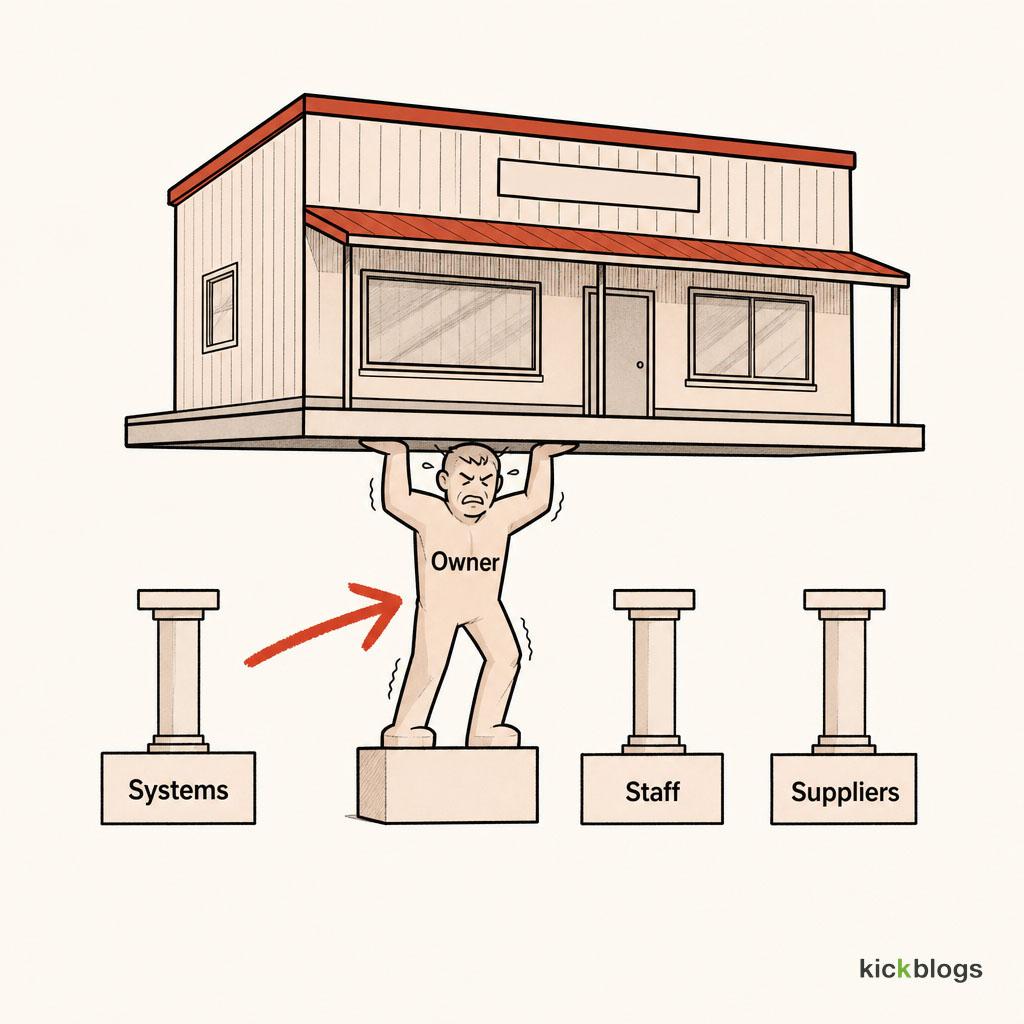
This is the move most sellers get backwards. The most valuable thing you can do before selling is make yourself unnecessary.
A site that only runs because you write every post, answer every email, and hold the whole thing in your head is worth less than one a stranger could take over on day one.
Buyers price that risk in hard. As Empire Flippers’ Greg Elfrink puts it, the aim is to “be the most useless person in your company.”
So in the months before you sell, document the process. Write down:
- How content gets made
- How links get built
- How the ad and affiliate accounts are managed (as if you were handing it to someone who’d never seen it before)
- Move work off your own name and onto a repeatable system
Do the same with concentration. If one traffic source or one affiliate programme carries most of the site, that’s the first thing a buyer will discount.
FE International lists owner-dependent earnings and single-source traffic among the factors that lower a valuation, right alongside a declining niche.
Reducing owner-dependence does two jobs at once. It lifts the price, and it makes the handover in step seven far less painful.
4. Pick Where to Sell for the Size You Are
There’s no single best place to sell a website. There’s a best place for a site your size, and picking the wrong one is one of the quietest ways to lose money on the deal.
There’s no best place to sell a website. There’s a best place for a site your size.
The honest matching, fees included, because the fee is the part that bites hardest on a small site:
| Best for | What it costs | |
|---|---|---|
| Flippa | Sub-$100K sites and first-time sellers | Roughly 5% to 10% success fee plus a non-refundable listing fee. Big, largely cross-border buyer pool. |
| Empire Flippers | Larger, clean, verifiable sites | Flat 15% under $700K, with a $10,000 minimum. Needs about $2,000 a month profit to list. Priced in USD. |
| Australian broker | Local sale, AUD, local legal context | Around 5% to 10% commission plus roughly $4,000 marketing. Economics barely work under $100K. |
| Private sale | Owners with a buyer already in mind | Usually under $1,000 in costs. You do all the vetting and paperwork yourself. |
The trap for a small Australian site is Empire Flippers’ $10,000 minimum commission. On a $30,000 sale, that’s about a third of the price, and you’re paying it in US dollars.
Flippa is usually the more sensible home for a side-income site, with 123,022 active buyers in the first half of 2026 and many of them buying across borders.
If your site is small and you’re not in a rush, Flippa or a private sale will almost always leave more in your pocket than a premium broker.
Whichever you choose, list it on a marketplace where the buyers are already looking.
You can see what comparable sites are listed for on the KickBlogs marketplace.
5. Get the Deal Structure and Tax Right Before You Sign
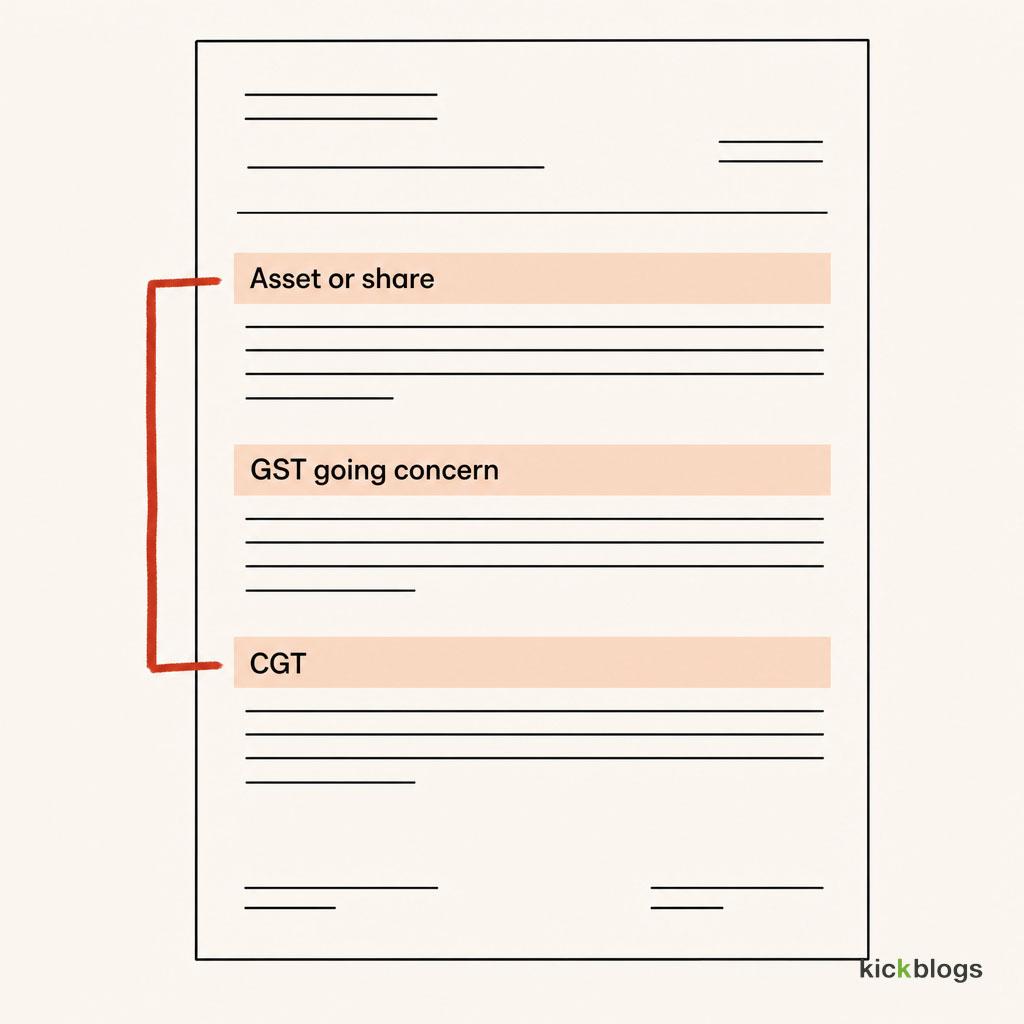
This is the step no overseas guide will give you, and it’s the one that decides how much of the sale price you actually keep.
Two structures exist. An asset sale transfers the site itself, the domain, content, goodwill and accounts.
A share sale transfers the company that owns it. They’re taxed differently, and they transfer different things, so Sprintlaw is worth reading before you agree to either.
Most small website sales are asset sales.
Then GST. If you’re registered for GST, structure the sale as the sale of a going concern, and it can be GST-free.
The conditions are specific: the buyer is registered for GST, you both agree in writing on or before the day of sale that it’s a going concern, you hand over everything needed to run the site, and you keep trading until that day.
Get it wrong and, as law firm Hall & Wilcox notes, it’s the seller who has to remit the 10% to the ATO. If you’re under the $75,000 threshold and not registered, this generally won’t arise.
Then capital gains tax. Under current law, an individual or trust that has held the site twelve months or more gets the 50% CGT discount, and a small business may qualify for further concessions on top.
One date matters: a sale completed up to 30 June 2027 keeps the full discount. From 1 July 2027, it’s replaced by inflation indexation plus a 30% minimum tax.
This is general information, not advice, and your position turns on who owns the site, so have an accountant confirm the tax and the GST clause before you sign anything.
One more piece of protection. Have the funds sit in escrow until the handover is done, so the buyer can’t take control and then refuse to pay, and you can’t take the money and disappear.
Most marketplaces build this in. A private sale needs you to arrange it.

6. Vet the Buyer and Set Honest Expectations
Selling isn’t about finding a buyer. It’s about finding the right one, at a price the market will actually pay, and not talking yourself into the first offer out of impatience.
Expect it to take time
Empire Flippers’ own data puts the average sale at about 129 days, and the final price at 86% of the listing.
So when the first offer comes in below your ask, that’s not an insult; it’s the shape of a normal deal.
Negotiate the terms as much as the number: payment schedule, any earn-out, and how long you’ll stay on to help.
Don’t sell on potential
The moment you start pitching what the site could do rather than what it does.
A buyer hears risk and responds with an earn-out that pushes your money years down the track.
Show them the real numbers and let the upside be their idea.
Hesitation is information
Watch your own hesitation.
If you keep finding reasons not to accept a fair offer, that’s worth listening to.
It sometimes means the timing is wrong, and no rule says you have to sell the month you first think about it.
7. Run a Clean Handover
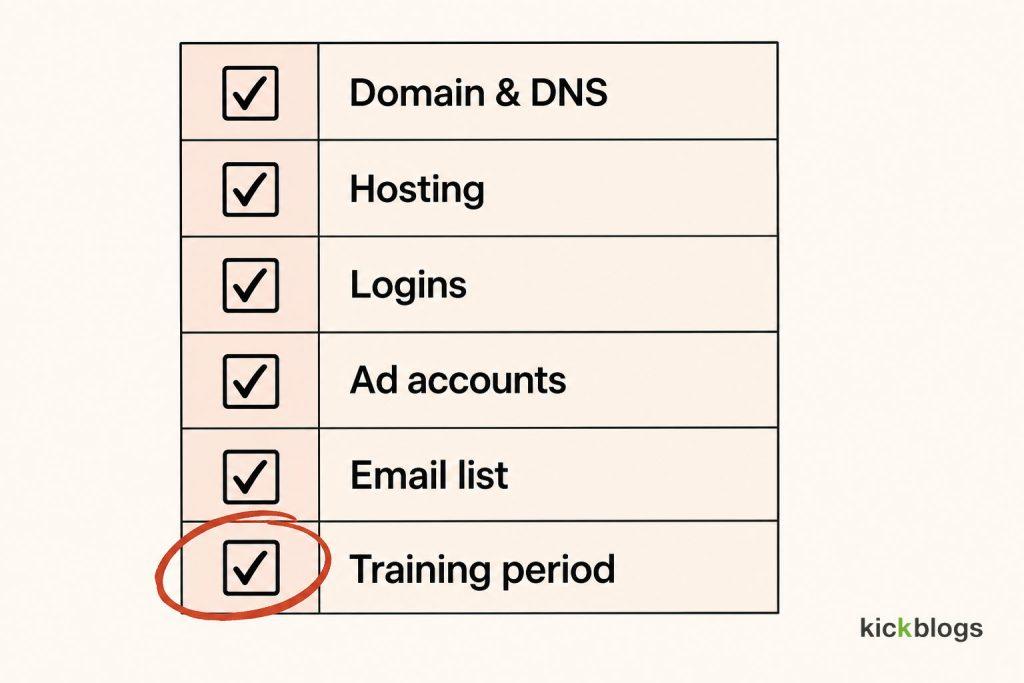
The deal isn’t done when the money clears. It’s done when the buyer is running the site without you, and a messy handover is how a good sale turns into weeks of late-night support messages.
Work off a checklist. For an online business, Sprintlaw lists the pieces that have to move:
- Domain transfer and the DNS changes that go with it
- Hosting, and admin access to the CMS, whether that’s WordPress, Shopify or a SaaS back end
- The ad, affiliate and analytics accounts
- The email list and any social accounts
- Brand assets, logins, and a documented handover period where you’re available for questions
Then the guardrail that saves both of you: don’t change things during the transition. Taking control is not the same as improving. The buyer should hold off on redesigns and, especially, on changing URLs for the first month, because that’s how a freshly bought site loses the rankings it was bought for.
Hand over the passwords, stay reachable for the agreed window, and then let go cleanly. A dignified handover is what gets you the referral and, if you ever want to buy your next site, the relationship.
When you’re ready to sell, or you just want a straight answer on what it’s worth first, tell us about your site. We’ll give you a free, no-obligation valuation. No pressure to list.
Frequently Asked Questions
Where’s the best place to sell a website in Australia?
It depends on size. A sub-$100K side site usually does best on Flippa or through a private sale, because Empire Flippers needs about $2,000 a month in profit to list and its $10,000 minimum commission punishes small deals. Larger, clean sites suit Empire Flippers or a full broker. An Australian broker keeps the sale local and in AUD but charges commission plus marketing.
Do I pay tax when I sell my website in Australia?
Generally yes. The gain is added to your income and taxed at your marginal rate, though an individual or trust holding the site twelve months or more currently gets the 50% CGT discount, and small business concessions may reduce it further. From 1 July 2027 the discount changes. This is general information, so confirm your own position with an accountant.
How long does it take to sell a website?
Plan for months, not weeks. Empire Flippers’ average sale takes about 129 days from listing to settlement, and that’s before the preparation you do beforehand. Sites with clean books and low owner-dependence sell faster, because there’s less for a buyer to worry about.
Should I use a broker or sell my website myself?
A marketplace or broker brings vetted buyers, escrow and a process, in exchange for a commission. A private sale saves the fee but puts the vetting, the paperwork and the escrow on you. For most owners the marketplace fee is worth it for the buyer pool alone, unless you already have a buyer in mind.
Do I need a lawyer to sell my website?
For a small, clean asset sale on a marketplace, often not, because the platform supplies the contract and escrow. It’s worth a lawyer’s eye once there’s an earn-out, a share sale, staff, or anything unusual in the terms. Either way, get an accountant across the GST clause and the CGT before you sign.
Get High-Level Support
What Is My Website Worth? An Australian Valuation Guide
It’s easy: you can get a number in about ten seconds. Paste your website URL…
Aged Domains: Why an Established Site Ranks Faster Than a New One
Four listings are presented to you, priced low to high: Concept, New, Aged Starter, Established….

How To Use Instagram For Business Without Chasing Followers
Nearly every guide about using Instagram for business opens with the same instruction. Build a…

Buying a Local Business: What Turnkey Really Means
“Turnkey” is the word a seller reaches for when they’d rather you stopped asking questions….

Get More Clicks on Your Google Ads Without Paying More
Most articles on this topic list five or six ways to get more clicks. The…

Starting a Business After The Kids Leave Home
The Victorian Government’s Better Health Channel describes it in language most people would not dare…

You Need To Know This – Before Starting An Online Business
Almost every guide to starting an online business opens the same way. Here are the…

How To Successfully Run A Facebook Page
You should have a Facebook Page. That part of the standard advice is correct, and…