
It’s easy: you can get a number in about ten seconds. Paste your website URL into any number of free valuation calculators, and they’ll give you a two-decimal figure that makes it believable.
You give the next tool a go, and it gives you something different. You try a third, and this one disagreed with both. The numbers are almost certainly wrong.
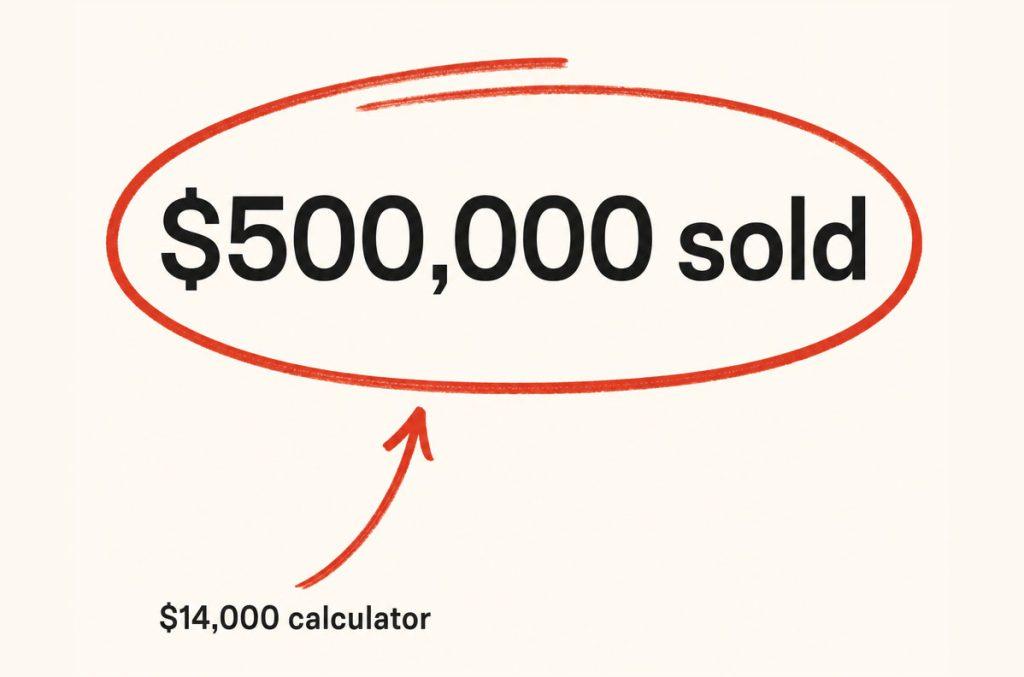
Ahrefs tested this with a real sale. A site the author was in the process of selling for $500,000 came back from one of these calculators valued at $14,000.
Not off by a little. Off by a factor of thirty-five.
So this guide does the opposite of a calculator. It shows you where the real number comes from, how the buyer sees it, and what an Australian owner keeps after the tax office takes its share.
That last part matters more than any multiple, and almost every guide on this topic is written for Americans who never mention it.
One disclosure before we start. KickBlogs runs a marketplace for buying and selling established websites, so we have an interest in you deciding to sell.
That is exactly why the method below is one you can run yourself, on a spreadsheet, without us. A valuation you cannot check is not a valuation. It’s a sales pitch.
The Number That Sets the Price Is Profit, Not Traffic
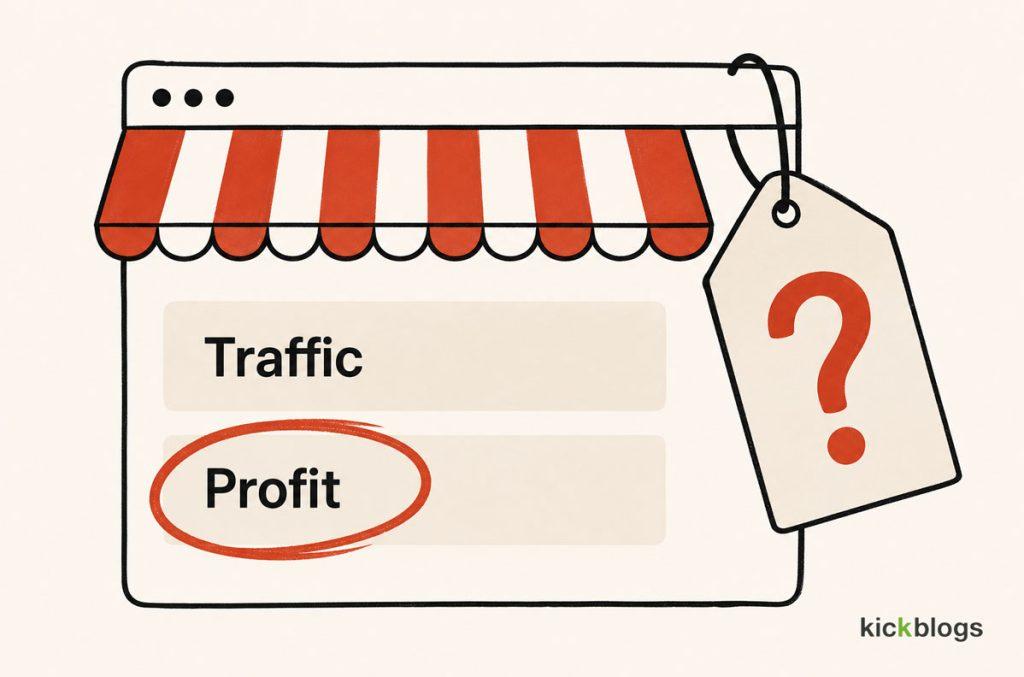
Traffic feels like the thing worth money. It’s the number you watch, the one that goes up when you do good work.
But a buyer is not purchasing your traffic. They’re purchasing the profit that traffic produces, and those aren’t the same thing.
This is exactly why the free calculators fail. They “base their numbers purely on traffic and domain rating,” as Ahrefs puts it, and ignore the only figure a buyer cares about.
A site with a million visitors and no monetisation is worth a fraction of a site with a tenth of the traffic and a clean revenue stream.
So the first rule of valuing your site is unglamorous. Find your real monthly net profit, averaged over the last twelve months.
Not gross revenue. Not your best month. The average of what actually landed in your account after every cost, across a full year.
A valuation you cannot check is not a valuation. It’s a sales pitch.
Net Profit, SDE and EBITDA Are Not the Same Number
Buyers use three different profit figures depending on the size of the business, and using the wrong one will either undersell you or make your asking price look naive. Here is what each one means in plain terms.
Net profit
Net profit is revenue minus every expense. Hosting, tools, contractors, your own time if you pay yourself.
For a small content or affiliate site run by one person, it’s usually what buyers look for, and they apply a monthly multiple to it.
Seller’s Discretionary Earnings
Seller’s Discretionary Earnings, or SDE, is net profit with the owner’s personal costs added back in.
Flippa defines it as “net profit plus any personal expenses that the owner runs through the business.”
If you pay yourself a $60,000 salary and run your phone and car through the business, those come back in, because a new owner will not have them.
SDE is the standard figure for ecommerce stores under roughly $5 million in revenue.
EBITDA
EBITDA is earnings before interest, tax, depreciation and amortisation.
It’s the figure used for larger businesses, generally above the $5 million mark, where there’s a management team rather than a single owner doing everything.
Most Australian site owners reading this are in the first two camps. If you run a blog or an affiliate site, think in monthly net profit.
If you run a store, work out your annual SDE. Get that figure honest and defensible, because everything else is a multiple of it.
The Multiple: What Buyers Actually Pay in 2026
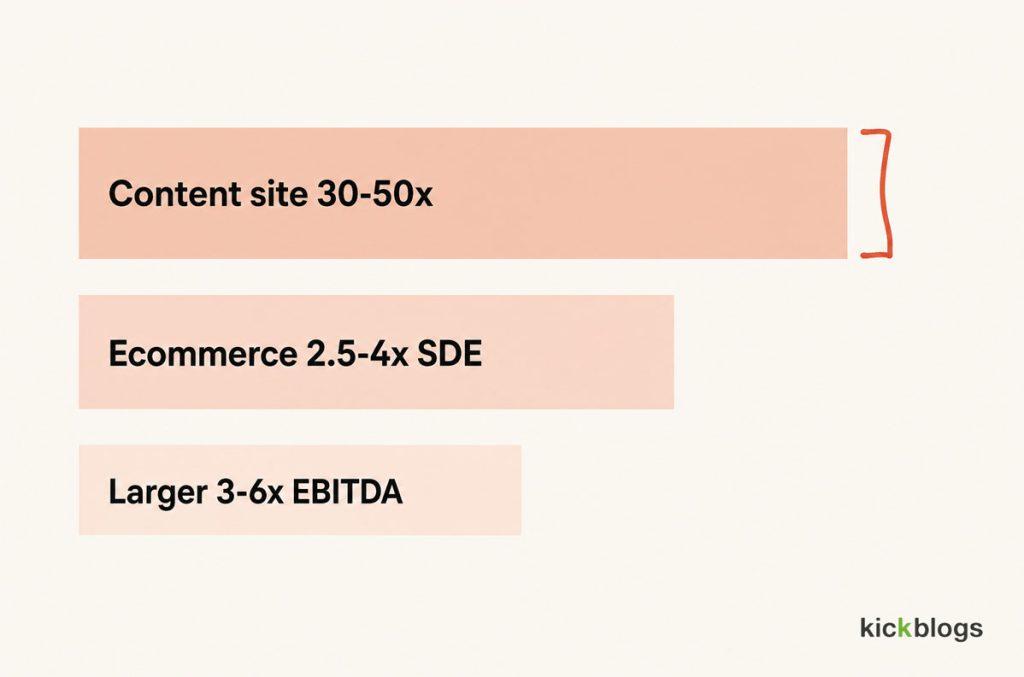
A multiple is the number buyers pay per dollar of profit. It’s where the market sets the price, and it moves with business type, risk and demand.
These are the current ranges.
| Typical multiple | Applied to | |
|---|---|---|
| Content / affiliate site | 30x to 50x | Monthly net profit |
| Ecommerce store (under $5M) | 2.5x to 4x | Annual SDE |
| Ecommerce brand ($5M+) | 3x to 6x | Annual EBITDA |
| SaaS / subscription | 4x to 10x | Annual recurring revenue |
For content and affiliate sites, Empire Flippers prices listings at a monthly multiple that “typically falls between 30 and 50,” and the average content site on its marketplace transacted at around 33x monthly net profit in 2025.
Ahrefs puts the everyday range slightly tighter, at 30x to 45x monthly net profit. Either way, the unit is monthly, not annual.
Thirty times your monthly profit, not thirty times your yearly profit. Getting that unit wrong is the single most common valuation mistake.
For ecommerce, Flippa’s 2026 data puts most stores at 2.5x to 4x SDE, with profit multiples across the market settling near 3.98x by late 2024.
Stronger brands with real margins reach the top of that range. Fragile ones sit at the bottom. Notice that these are wide ranges. A content site can sell for 30x or for 50x.
That gap is not random. It’s the difference between a business a buyer trusts and one they do not, and closing it’s where the real money is.
Why Two Sites With Identical Profit Sell for Different Money
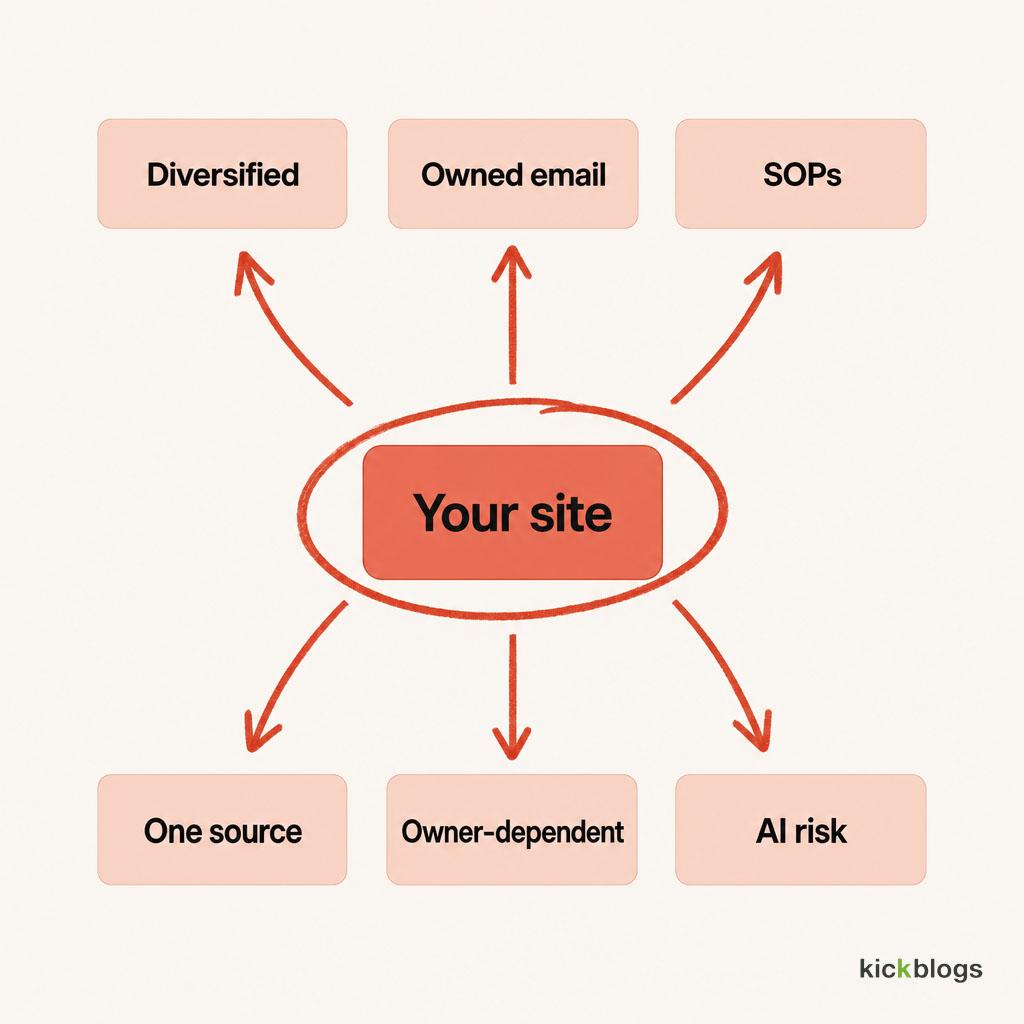
Two sites both clear $2,000 a month. One sells for 35x, and one sells for 48x. Same profit, a $26,000 difference in price. The multiple is a risk score, and these are the things that move it.
Where the traffic comes from
Organic search traffic is worth more than paid or social traffic, because it’s harder to acquire and it does not switch off when the owner stops paying.
A buyer will pay a premium for rankings that keep working while they sleep, and discount heavily for traffic that depends on an ad account or a single social algorithm.
Revenue concentration
This is the quiet multiple killer. If one affiliate partner, one client, or one product is more than a quarter of your revenue, a buyer sees a single point of failure.
That concentration can knock one to three turns off your multiple on its own, because the buyer is pricing the day that one partner leaves.
How much the business needs you
A site that runs on documented processes and a couple of contractors is an asset.
A site that only works because you personally write every post and answer every email is a job, and buyers pay far less for a job. The more removable you are, the higher the multiple.
Age and stability
A site with three years of steady earnings is safer than one that spiked six months ago. Buyers pay for a track record, because a track record is the only real evidence that the profit will survive the handover.
The trend
A business growing month on month earns a higher multiple than a flat one, and a declining one gets punished hard. Buyers extrapolate. Show them a line going up, and they pay for next year too.
None of these requires you to earn a single dollar more. They’re about making the current profit look as safe and as transferable as it actually is.
Work It Out Yourself: Two Australian Examples
Enough theory. Here is the sum, twice, in dollars.
A content site
Your affiliate and display income has averaged $2,000 a month in net profit over the last year. Traffic is mostly organic. Income comes from three sources, none dominant. You spend about five hours a week on it.
At the market midpoint of 35x, that site is worth $70,000. Because the traffic is organic, the income is diversified, and the owner input is low, a buyer could justify the top of the range.
At 45x, the same site is worth $90,000. The profit did not change. The risk profile did.
Monthly net profit: $2,000. Multiple: 35x to 45x. Value $70,000 to $90,000.
An ecommerce store
Your store makes $120,000 a year in SDE after adding back your own salary and personal costs. Sixty percent of sales come through a single marketing channel.
At 3x SDE, that is $360,000. But the channel concentration is a real risk, and a careful buyer prices it. Drop to 2.5x, and the figure falls to $300,000.
Fix the concentration before you sell, spread the revenue across two or three channels, and you defend the higher multiple. That single change is worth $60,000 here.
Annual SDE $120,000. Multiple 2.5x to 3x. Value $300,000 to $360,000.
These are starting figures a buyer will negotiate from, not final prices. But they are built the way a buyer builds them, which is the only kind of estimate worth having.
The Part Every American Guide Skips: What You Actually Keep
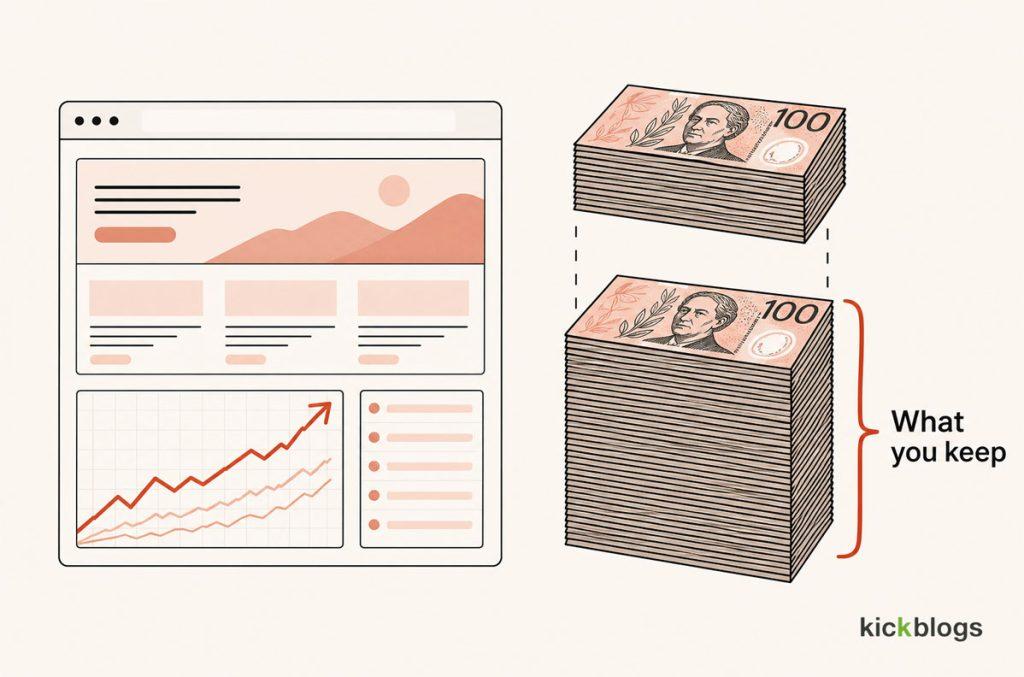
Here is where almost every article on this subject goes quiet, because almost every article on this subject is written for an American audience.
The sale price is not what you keep. What you keep is the sale price minus tax, and Australia has rules that can change that figure by tens of thousands of dollars.
If you’ve owned the site for more than twelve months, the general 50% CGT discount applies to the capital gain, as set out by business.gov.au.
Half the gain is simply not taxed. That alone is a reason not to rush a sale across the twelve-month line.
Then there are the small business CGT concessions, which are the part most owners have never heard of.
To qualify, you generally need aggregated turnover under $2 million, or net business assets of $6 million or less, and the asset has to pass the active asset test.
The ATO sets out four of them, and they can stack:
- The 15-year exemption, which makes 100% of the gain exempt if you have owned the business for at least fifteen years and are selling in connection with retirement.
- The 50% active asset reduction, which halves the gain again, on top of the general discount.
- The retirement exemption, which exempts up to a $500,000 lifetime limit.
- The rollover, which lets you defer the gain for at least two years.
Applied in sequence, these can reduce the tax on a business sale dramatically, in some cases to nothing.
This is not a loophole. It is deliberate policy for small business owners, and if you sell without checking whether you qualify, you may hand the tax office money you didn’t expect.
The sale price is not what you keep. What you keep is the sale price minus tax.
There’s also GST. If your sale qualifies as a “going concern,” it’s GST-free under the rules the ATO has set out.
The main conditions are that both you and the buyer are registered for GST, that you supply everything necessary to keep the business running, that you keep operating it until the day of sale, and that you both agree in writing that it is a going concern.
Get this right, and no GST applies. Get it wrong, as Hall & Wilcox notes, and the tax can land on the sale after the fact.
None of this is advice for your specific situation, and the thresholds are real conditions with real detail behind them.
Talk to an accountant before you sign. But walk in knowing these exist, because a buyer’s broker certainly does.
Where the Number Comes Under Attack: Due Diligence
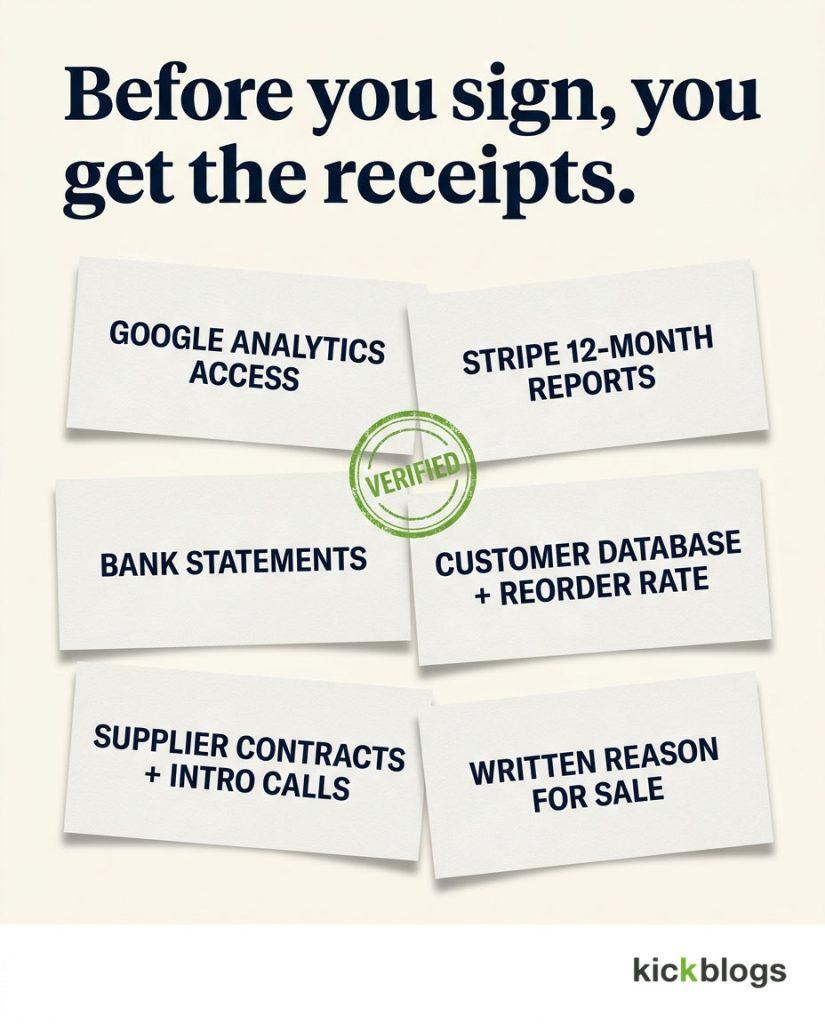
Your valuation is a claim. Due diligence is where the buyer tries to break it. Everything that survives that process is worth money, and everything that does not gets stripped out of the price.
Clean financials are the whole game. A buyer wants to see profit they can verify, not profit you assert.
In Australia, that means your figures should reconcile with something official, ideally your BAS lodgements and bank statements, not a screenshot of a dashboard. Numbers a buyer can trace are numbers a buyer will pay for.
Remove yourself from the operation before you list, not after. Write down how the business runs. Who publishes, who handles suppliers, who answers the emails.
A documented business with the owner already stepped back is the version that holds its multiple through diligence.
Fix the concentration problem if you have one. If a single channel or partner is carrying the business, spend the months before a sale spreading that load.
It’s the highest-return work you can do on the valuation, because it attacks the exact risk a buyer prices hardest.
Tidy the obvious liabilities. Confirm you own your content, images and brand outright. Sort out anything that a lawyer would flag, because a buyer’s lawyer will find it, and a surprise in diligence costs you far more than the same fact disclosed up front.
What Selling Actually Costs
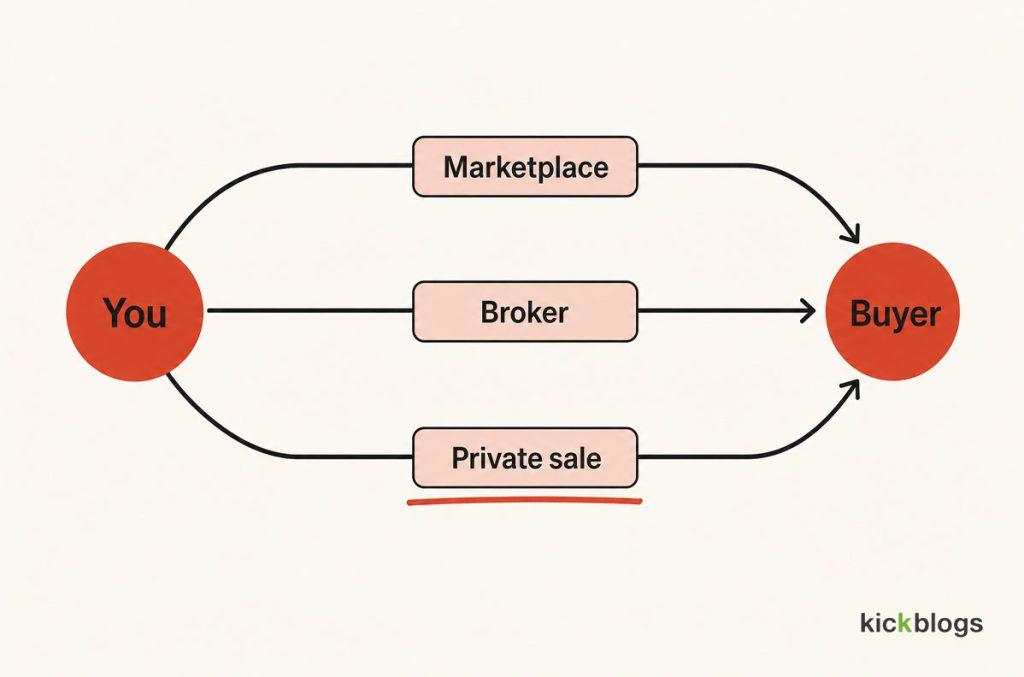
The headline price is not the cheque you receive. Where you sell decides how much of it you keep, and the trade-off is always the same. More reach costs more commission.
| Seller fee | The trade-off | |
|---|---|---|
| Flippa | 10% under $50k, 7.5% to $100k, 5% above $100k | Large audience, plus an upfront listing fee and more of the vetting on you |
| Empire Flippers | 15% on the first $700,000 | Curated buyer pool, high rejection rate, hands-on process |
| Private sale | No platform fee | You find the buyer, vet them, and handle the paperwork yourself |
Flippa’s tiered success fee rewards larger sales with a lower percentage. Empire Flippers charges a flat 15% on the first $700,000, which buys you a vetted, motivated buyer pool and a managed process.
A private sale costs nothing in commission and everything in time, and it works only if you already have a buyer or the patience to find one.
For an Australian owner, there’s a fourth consideration the global platforms don’t solve.
Your buyers, your currency and your verification documents are all Australian, and a marketplace built for AUD-priced, locally verifiable businesses removes friction that a US-centric platform adds at every step.
That is the gap KickBlogs is built for. You can see what comparable Australian sites are listing for on the KickBlogs marketplace before you set your own price.
Frequently Asked Questions
How much is my website worth?
For a content or affiliate site, take your average monthly net profit over the last twelve months and multiply it by 30 to 50. For an ecommerce store, take your annual SDE and multiply by 2.5 to 4. Where you land in the range depends on traffic source, revenue diversity, owner dependence and growth trend.
Are free website valuation calculators accurate?
No. They work from traffic and domain metrics and ignore profit, which is the only figure buyers actually pay for. Ahrefs documented one valuing a $500,000 site at $14,000. Treat any calculator result as a rough signal, never a price.
Do I pay capital gains tax when I sell my website in Australia?
Usually yes, but often far less than the headline rate. If you have held the site over twelve months, the 50% CGT discount applies, and you may also qualify for the small business CGT concessions, which can reduce the tax further. Check your eligibility with an accountant before selling.
What is the difference between net profit and SDE?
Net profit is revenue minus all expenses. SDE is that figure with the owner’s personal and discretionary costs added back, because a new owner will not carry them. Small content sites are usually valued on monthly net profit, ecommerce stores on annual SDE.
How long does it take to sell a website?
Anywhere from a few weeks to several months, depending on price, how clean your financials are, and how much the business depends on you. Sites with verifiable earnings and documented processes sell faster and closer to asking.
Can I increase my website’s value before selling?
Yes, and usually without earning more. Diversify your traffic and revenue so no single source dominates, document how the business runs so it does not depend on you, and build a clear record of stable earnings. Each one lifts the multiple a buyer will pay on the profit you already make.
Get a Real Number Before You List
A calculator gives you a number in ten seconds and a reason to distrust it. The method in this guide gives you a number you can defend, which is the only kind that survives a buyer.
If you would rather have that number checked by people who sell Australian sites every week, tell us about yours.
We will look at your profit, your traffic and your risk profile, and give you an honest valuation and an honest view of whether now is the time to sell.
Start a valuation enquiry, or read more in our guides on selling an online business.
Get High-Level Support
Aged Domains: Why an Established Site Ranks Faster Than a New One
Four listings are presented to you, priced low to high: Concept, New, Aged Starter, Established….

How To Use Instagram For Business Without Chasing Followers
Nearly every guide about using Instagram for business opens with the same instruction. Build a…

Buying a Local Business: What Turnkey Really Means
“Turnkey” is the word a seller reaches for when they’d rather you stopped asking questions….

Get More Clicks on Your Google Ads Without Paying More
Most articles on this topic list five or six ways to get more clicks. The…

Starting a Business After The Kids Leave Home
The Victorian Government’s Better Health Channel describes it in language most people would not dare…

You Need To Know This – Before Starting An Online Business
Almost every guide to starting an online business opens the same way. Here are the…

How To Successfully Run A Facebook Page
You should have a Facebook Page. That part of the standard advice is correct, and…
Buy an Established Website vs Build From Scratch: An Honest Comparison
A Shopify subscription costs about forty dollars a month. An established online business costs somewhere…